
6.6kW Solar System Price Australia: Cost, Output & Installation Guide
A 6.6kW solar system remains a popular residential solar size for Australian households looking to reduce grid electricity use without installing an oversized rooftop system. It can suit many small to medium-sized homes, particularly where daytime electricity consumption is moderate.
The final 6.6kW solar system price in Australia depends on your location, roof design, panel and inverter selection, electrical work, installation complexity and available solar incentives.
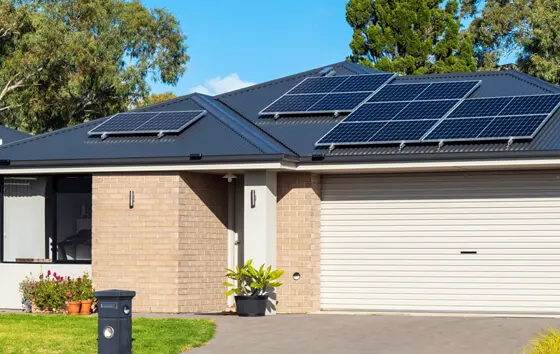
How Much Does a 6.6kW Solar System Cost in Australia?
A 6.6kW solar system from Australian Design Solar starts from $3,999*. Actual installed pricing can vary according to the solar panels, inverter, property location, roof type, switchboard requirements, site access and installation conditions.
When comparing a 6.6kW solar system price, it is important to compare more than the advertised package price. Two systems with the same nominal capacity can differ significantly in component quality, warranties, inverter technology, installation design and after-sales support.
A properly designed system should consider how much electricity your household uses, when you use it, available roof area, shading, roof orientation and whether you may add an EV charger or home battery in the future.
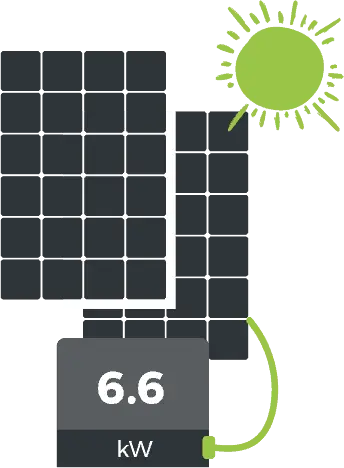
What Is a 6.6kW Solar System?
A 6.6kW solar system refers to the combined rated capacity of its solar panel array. For example, a system using approximately 440W panels may require around 15 panels to reach roughly 6.6kW of total panel capacity.
The exact number of panels depends on the wattage of the modules selected. Higher-wattage panels can achieve a similar overall system capacity with fewer panels, which may be helpful where usable roof space is limited.
Typical 6.6kW Solar Package Components
- Approximately 6.6kW of rooftop solar panel capacity
- A compatible solar inverter
- Solar mounting and racking
- DC and AC electrical protection
- Cabling, isolators and required electrical components
- Professional installation and system commissioning
- Monitoring capability where supported by the inverter
What Affects the Cost of a 6.6kW Solar System?
There is no single installed price that applies to every Australian property. Your quote should reflect the equipment, design and work required for your home.
Solar Panel Quality
Panel efficiency, manufacturer, product warranty, performance warranty and module technology can influence the overall package price.
Inverter Selection
The inverter converts the DC electricity generated by your panels into AC electricity used by your home. Brand, features, phase configuration and battery compatibility can affect system cost.
Roof Conditions
Tile, metal, multiple roof faces, steep pitches, difficult access and complex mounting requirements may change installation labour and material costs.
Property Location
Installation costs, solar generation conditions, network requirements and applicable incentives can differ between Australian states and regions.
Switchboard & Electrical Work
Some properties may need switchboard upgrades or additional electrical work before the solar system can be safely connected.
Battery Preparation
If you intend to add energy storage later, selecting suitable equipment and designing the system with future battery requirements in mind can be valuable.
How Much Power Does a 6.6kW Solar System Produce?
As a broad guide, a well-positioned 6.6kW solar system may generate around 24–30kWh of electricity per day under favourable conditions. Actual solar production varies throughout the year and from property to property.
Typical daily generation: approximately 24–30kWh per day as a general estimate. Weather, season, shading, roof orientation, panel angle, temperature and system losses all influence real-world output.
Solar generation is normally higher during longer, sunnier days and lower during cloudy conditions and winter months. A system facing an appropriate direction with minimal shading will generally perform better than an equivalent system affected by substantial shade.
Your solar proposal should therefore use property-specific information rather than treating a generic daily production figure as a guaranteed result.
6.6kW vs 10kW vs 13kW Solar Systems
Choosing the right solar capacity depends on electricity consumption, available roof space, export limits, budget and future energy requirements. A larger system is not automatically better for every property.
| System Size | Starting Price* | Indicative Daily Output | Common Application |
|---|---|---|---|
| 6.6kW solar system | From $3,999* | Approx. 24–30kWh/day | Small to medium households |
| 10kW solar system | Varies by configuration | Approx. 38–48kWh/day | Larger homes and higher electricity demand |
| 13kW solar system | Varies by configuration | Approx. 50–65kWh/day | High-consumption households and larger rooftops |
*Prices and output figures are indicative only. Generation varies according to location, weather, orientation, shading, equipment and installation conditions.
Solar Panels and Inverters for a 6.6kW System
Equipment selection matters because the solar panels and inverter influence system performance, monitoring, warranty coverage and future upgrade options.
High-Efficiency Solar Panels
Modern higher-wattage modules can reduce the number of panels required to achieve approximately 6.6kW of array capacity. This can be particularly useful on homes with restricted usable roof area.
Solar Inverter
Inverter selection should account for system design, single-phase or three-phase supply, monitoring requirements, network rules and any planned battery installation.
Solar Monitoring
Compatible monitoring platforms can help homeowners understand solar production and identify how system generation changes throughout the day and across different seasons.
How Many Solar Panels Are Needed for 6.6kW?
The number of panels required depends on the wattage of each solar module. For example, approximately 15 × 440W solar panels provide around 6.6kW of nominal panel capacity.
| Example Panel Rating | Approximate Panel Count | Approximate Array Size |
|---|---|---|
| 415W | 16 panels | 6.64kW |
| 440W | 15 panels | 6.60kW |
| 475W | 14 panels | 6.65kW |
These examples are illustrative. The final number and layout of solar panels should be determined during system design using the selected module specifications and available roof area.
6.6kW Solar Rebates and STCs in Australia
Eligible small-scale solar installations may benefit from Australia’s Small-scale Renewable Energy Scheme through Small-scale Technology Certificates, commonly referred to as STCs.
The value associated with STCs can reduce the upfront cost of an eligible solar installation. The number and value applicable to a particular installation depend on factors including system eligibility, installation date, location and prevailing certificate values.
State-based programs and other energy incentives can also change over time. For this reason, customers should confirm current eligibility and available incentives when requesting their solar quote rather than relying on an older advertised rebate amount.
How Much Can a 6.6kW Solar System Save?
Solar savings depend heavily on how much generated electricity you use inside the property rather than exporting it to the electricity grid.
During daylight hours, solar electricity can supply household appliances before additional electricity is imported from the grid. Any excess generation may be exported, subject to your electricity retailer and network arrangements.
Factors Influencing Solar Savings Include:
- Your household’s daytime electricity consumption
- Solar generation at your property
- Your electricity usage tariff
- Available feed-in tariff for exported energy
- Roof orientation and shading
- Whether you later install battery storage
- Changes in household electricity demand over time
Because electricity tariffs and consumption patterns vary, payback periods should be calculated using your actual electricity bills and a realistic system-generation estimate.
Can You Add a Battery to a 6.6kW Solar System?
Yes. A home battery can store some excess solar electricity generated during the day for use later, subject to system compatibility, battery capacity, inverter configuration and household energy requirements.
Battery storage may be worth considering if your household exports significant solar energy during daylight hours but consumes substantial electricity in the evening. The appropriate battery capacity should be based on actual consumption and solar generation rather than simply choosing the largest available battery.
Sungrow Battery
Explore compatible energy-storage options and system configurations for residential solar installations.
Learn about Sungrow solar batteries →Alpha ESS Battery
Compare Alpha ESS battery options for homeowners considering solar energy storage and greater self-consumption.
Explore Alpha ESS batteries →SAJ Solar Battery
Review SAJ battery information, storage configurations and considerations when planning a solar-plus-battery system.
View SAJ battery information →Sigenergy Battery
Learn more about Sigenergy battery storage options for Australian homes and modern energy-management requirements.
Explore Sigenergy battery pricing →Fox ESS Battery
Compare Fox ESS battery storage information when considering a future solar battery upgrade.
View Fox ESS battery pricing →Is a 6.6kW Solar System Right for Your Home?
A 6.6kW solar package can be a practical choice for many Australian households, but system sizing should be based on your property and electricity profile rather than selecting a system solely because it is a common size.
6.6kW May Suit You If…
- You have a small to medium-sized household
- Your roof has suitable usable space
- You want to reduce daytime grid consumption
- Your electricity usage is moderate
- You may consider a battery later
Consider a Larger System If…
- Your household uses substantial electricity
- You have an electric vehicle or plan to buy one
- You use electric heating or cooling extensively
- You have a pool or other large electrical loads
- You expect electricity consumption to increase
Check Your Roof First
- Available roof area
- Roof orientation
- Shading from trees or buildings
- Roof pitch and material
- Potential future extensions
6.6kW Solar System Installation Process
Energy Review
We consider your electricity consumption, property and future energy requirements.
System Design
Panel placement, inverter selection and system capacity are planned around the site.
Installation
The panels, mounting, inverter and electrical equipment are professionally installed.
Commissioning
The system is checked, commissioned and monitoring is configured where applicable.
Why Choose Australian Design Solar?
Solar is a long-term property investment. The system design, equipment selection, installation quality and ongoing support can be just as important as the initial price.
Australian Solar Experience
Solar solutions designed around Australian homes, energy usage and local installation requirements.
System-Specific Advice
Recommendations can consider your roof, consumption, future battery plans and overall energy objectives.
Quality Equipment Options
Choose from established solar and battery technologies according to your requirements and budget.
Learn more about Australian Design Solar and our residential solar and energy-storage solutions.
6.6kW Solar System FAQs
How much is a 6.6kW solar system in Australia?
Australian Design Solar offers 6.6kW solar systems starting from $3,999*. Your final installed price depends on equipment selection, property location, roof conditions, electrical requirements and installation complexity.
How many panels are in a 6.6kW solar system?
It depends on panel wattage. For example, 15 × 440W panels provide approximately 6.6kW of nominal solar panel capacity, while different module wattages may require a different number of panels.
How much electricity does a 6.6kW solar system generate per day?
A general estimate is around 24–30kWh per day under favourable conditions. Actual production depends on location, season, weather, shading, roof orientation, panel angle and system performance.
Is 6.6kW enough for a family home?
It can be suitable for many small to medium-sized households. The correct system size depends on your electricity consumption, available roof space, daytime usage and future requirements such as an EV or battery.
Can I install a battery with a 6.6kW solar system?
Yes, subject to equipment compatibility and system design. Battery sizing should take account of your excess solar generation, evening consumption, backup requirements and budget.
Is a 6.6kW solar system worth it in Australia?
Its financial value depends on installation cost, solar generation, electricity tariffs and how much solar electricity your household consumes directly. A personalised estimate using your electricity bills provides a more useful assessment than a generic payback figure.
Should I choose 6.6kW or 10kW solar?
A 6.6kW system can suit moderate household consumption, while a 10kW system may be appropriate where electricity usage and available roof space are greater. Network requirements and future energy demand should also be considered.
Does a 6.6kW solar system work during a blackout?
A standard grid-connected solar system normally shuts down during a grid outage for safety. Backup operation requires compatible battery and backup equipment designed for that purpose.
How much roof space does a 6.6kW solar system need?
Roof-space requirements depend on panel dimensions, wattage and layout. A site-specific design is required because roof shape, orientation, setbacks and shading can affect the usable area.
Can I upgrade from 6.6kW solar to a larger system later?
In some cases, yes, but an upgrade may require changes to the inverter, panels or electrical configuration and will be subject to network and installation requirements. Planning for future energy demand during the original design can make expansion easier.
Compare Other Solar System Sizes
10kW Solar System
Compare a larger residential solar system for households with higher energy consumption and sufficient roof space.
Explore 10kW solar systems →13kW Solar System
Learn about larger rooftop solar solutions for high-consumption households and properties planning increased electrification.
Explore 13kW solar systems →Solar & Battery Options
Explore Australian Design Solar for solar panels, battery storage and residential energy solutions.
Explore Australian Design Solar →Get a Personalised 6.6kW Solar System Quote
The best solar system is one designed for your property rather than selected from capacity alone. Australian Design Solar can assess your electricity usage, roof, solar goals and future energy requirements to recommend an appropriate solution.
Compare a 6.6kW system with larger options and determine which configuration makes sense for your household before you install.
Request Your Solar Quote*Starting prices are indicative and subject to eligibility, location, system design, selected products, installation conditions and applicable incentives. Solar generation figures are estimates only and actual performance varies.