Offset electricity used on site
Solar can supply part of your daytime demand for lighting, equipment and other business loads. Review consumption patterns to understand how much generation your site may use directly.

Solar for Australian businesses
Put your commercial roof to work with a solar system designed around your electricity demand and operating hours.
Australian Design Solar helps businesses compare rooftop solar, inverter options and battery storage. From a small commercial premises to a larger warehouse or workshop, we start with how your site uses energy and what you want the project to achieve.
Request a tailored proposal that considers your electricity bills, roof space, electrical infrastructure and installation requirements.
Generate electricity at your workplace
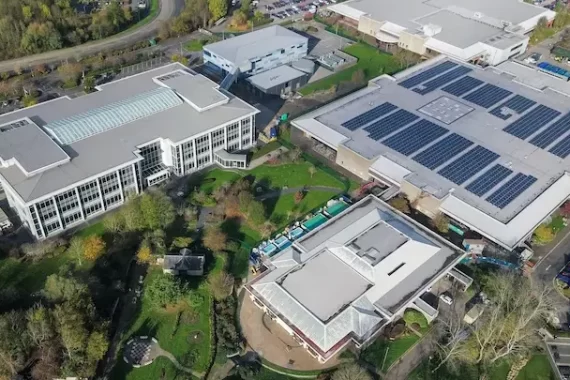
Commercial solar panels generate electricity during daylight hours. Using that electricity on site can reduce the amount your business buys from the grid.
The fit between solar generation and business consumption matters. A site operating throughout the day may use its generation differently from a business with evening shifts, weekend closures or seasonal demand.
We help you explore a system size and equipment configuration with those operating patterns in mind. The goal is a proposal that explains the equipment, installation scope and assumptions behind the recommendation.
Set clear project goals
Your priorities help define the project. Tell us whether your focus is daytime electricity purchases, future site changes or a combined solar and battery system.
Solar can supply part of your daytime demand for lighting, equipment and other business loads. Review consumption patterns to understand how much generation your site may use directly.
Discuss planned equipment, longer operating hours or electric vehicle charging before choosing a system. Future changes are useful inputs to the design discussion.
If electricity demand extends beyond solar hours, ask whether a battery merits assessment. Storage should have a clear purpose and be evaluated alongside the solar project.
Compare commercial system sizes
System size should follow site demand and suitability. The options below are starting points for assessment, rather than fixed recommendations for a particular business type.
| System option | What to assess | Explore |
|---|---|---|
| 20kW solar | Daytime consumption, available roof area and the electrical setup of a smaller commercial site. | View 20kW solar |
| 30kW solar | A greater generation requirement, the proposed panel layout and how production aligns with operating hours. | View 30kW solar |
| 50kW solar | Higher site consumption, roof and electrical capacity, network conditions and project coordination. | View 50kW solar |
| Custom project | Different capacity requirements, multiple roof areas, existing solar or a combined solar and storage proposal. | Discuss your project |
Solar panel capacity is measured in kW. Electricity generated and consumed is measured in kWh. Actual generation varies with location, weather, season, shading and system design.
Before equipment is selected
A useful assessment brings together energy data, building details and operational requirements. These are the areas to discuss with our team.
Recent bills provide a starting point. Where available, interval data gives a clearer picture of when power is used across working days, weekends and different seasons.
Roof age, usable area, shading and access affect the proposal. Discuss any planned roof works and what structural assessment may be required for the project.
Share known details about switchboards, supply configuration and existing equipment. Ask which electrical checks and potential upgrades are included in the scope.
Identify the building owner, site manager and relevant decision-makers early. For leased premises, discuss permissions and the arrangements needed before work proceeds.
Ask which network approvals and export conditions apply to the proposed system. Confirm who manages each project step and which costs are included.
Tell us about delivery zones, customer access, sensitive equipment and preferred working hours. Identify any electrical shutdown planning needed before scheduling installation.
Understand the complete project cost
Commercial solar is quoted according to the selected system and site requirements. Panel capacity alone does not capture the full scope of a business installation.
Equipment models, roof access, mounting arrangements, cable routes, switchboard work and connection requirements can all affect the proposal. Request an itemised quote so you can compare inclusions clearly.
If a proposal includes savings or payback estimates, ask for the generation, self-consumption, tariff and cost assumptions. Outcomes depend on your site and operating conditions; a generic promise cannot replace a project assessment.
Different businesses, different energy needs
Review opening hours, tenancy arrangements and daytime electricity use. Share any restrictions on building access or work around customers and staff.
Roof area is only one part of the assessment. Machinery loads, shift patterns, deliveries and roof condition help define a practical proposal.
Identify daytime and evening demand, refrigeration and equipment priorities. Solar-only and storage options can be discussed against the site’s actual operating pattern.
Commercial solar with battery storage
A compatible battery can store surplus solar for later use. For a business, the assessment should start with a specific objective, such as shifting energy to later operating hours or exploring backup for selected loads.
Share your consumption data and ask how the proposed storage capacity, output power and control settings support that objective. Demand-charge management needs a tariff and load-profile assessment.
Backup is a separate design consideration. Confirm supported circuits, power limits and outage operation rather than assuming a battery will keep the entire business running.
Explore solar systems with battery storagePlan the work around your site
Provide your location, business hours, bills and goals. Identify the site contact and any property permissions to resolve.
Review suitable configurations, required site checks and installation scope. Clarify the price, assumptions and exclusions.
Confirm approvals, access, work areas and any planned shutdown arrangements before the installation schedule is agreed.
Retain system documentation, monitoring information where included, warranty details and support contacts for your records.
Australian Design Solar
We help businesses discuss commercial solar options with a focus on site requirements, equipment selection and a clear installation proposal. Bring your questions about the system and the project process to our team.
Learn more about why choose Australian Design Solar and review our Warranty Policy and Terms and Conditions.
Confirm who will monitor the system and how to report concerns. Ask about maintenance recommendations, warranty responsibilities and any separately quoted service arrangements.
Keep your accepted quote, invoices, equipment details and handover documents together so your site team can find them when needed.
Contact Australian Design SolarCommercial solar service enquiries
Discuss your commercial solar project in Sydney, including Norwest, Bella Vista, Castle Hill, Baulkham Hills, Kellyville, Seven Hills, Blacktown, Parramatta, Rouse Hill, Riverstone and surrounding areas.
For projects in Melbourne, Brisbane, Adelaide, Canberra or other locations, send your postcode and site details so our team can confirm availability and assessment requirements.
Commercial solar FAQs
The recommendation depends on consumption, operating hours, usable roof area and connection requirements. Recent bills and interval data, where available, help assess suitable capacity. Our 20kW, 30kW and 50kW pages are useful starting points for comparison.
A site-specific quote accounts for equipment, installation access, mounting, electrical work and connection requirements. Request the full scope and total payable amount so you can compare proposals fairly.
Work areas, access requirements and any electrical shutdowns should be discussed in advance. Tell us about sensitive operations and preferred working times so the installation arrangements can be planned around your site.
Yes. Identify the property owner and relevant decision-makers early. Discuss permissions, access and the arrangements required for the proposed installation before accepting a project scope.
A zero bill should not be assumed. Grid imports, supply charges, demand charges where applicable and your tariff structure affect the outcome. Ask any savings estimate to explain its assumptions.
Storage should address a defined objective and be assessed using your consumption pattern and site requirements. Discuss later operating hours, surplus solar, tariff considerations and any backup priorities before choosing a battery.
A standard grid-connected solar installation normally shuts down during a grid outage. Backup requires suitable equipment and configuration. Ask for supported circuits, output limits and outage behaviour to be specified if this is part of your project.
The schedule depends on assessment, approvals, equipment, roof access and the agreed installation scope. Ask our team to confirm the expected stages and timing for your site rather than relying on a generic timeframe.
Have your postcode, electricity bills, business hours and building ownership details available. Share interval usage data, roof information and existing solar details if you have them. Let us know about planned equipment changes.
Start with your business needs
Talk to Australian Design Solar about your electricity use, site requirements and project goals. Compare suitable systems and get a clear quote for the next step.