
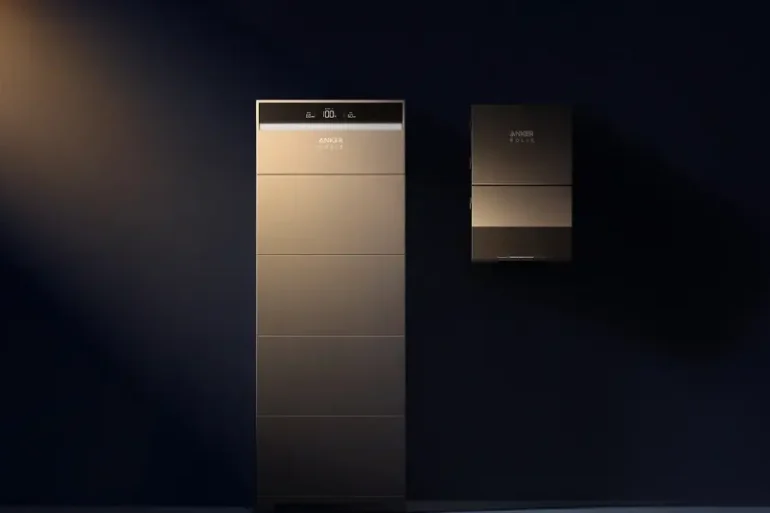
25kW Solar Battery Price Sydney – 25kWh Battery Cost & Installation 2026
Looking for the latest 25kW Solar Battery Price in Sydney? Australian Design Solar provides professionally designed solar battery systems for Sydney homes and businesses, including modular battery solutions around the 25kWh capacity range.
A large home battery can store surplus electricity produced by your solar panels during the day and make that energy available later, including during the evening and overnight. For high-energy households, EV owners and larger solar systems, approximately 25kWh of battery storage can provide significantly greater usable storage than smaller 10–15kWh systems.
People often search for a “25kW solar battery”, but battery storage capacity is normally measured in kilowatt-hours (kWh). A 25kWh battery describes how much energy can be stored, while kW generally describes how much power the system can deliver at one time. This guide therefore discusses approximately 25kWh solar battery systems while also answering the common search term “25kW solar battery”.

How much does a 25kW solar battery cost in Sydney?
In 2026, an approximately 25kWh solar battery system in Sydney can broadly cost around $9,000–$18,000+ installed depending on battery brand, usable storage capacity, inverter requirements, electrical work, backup configuration and installation complexity.
Some value-oriented modular batteries may fall below this range in straightforward installations, while premium systems, new hybrid inverters, gateway equipment, three-phase configurations or extensive backup circuits can increase the total cost.
| Battery size | Indicative 2026 installed price* | Typical application |
|---|---|---|
| 10kWh | $5,500–$10,000+ | Moderate household evening use |
| 15kWh | $7,000–$12,000+ | Medium to higher household usage |
| 20kWh | $8,000–$14,000+ | Large households and higher solar surplus |
| 25kWh | $9,000–$18,000+ | High-energy homes, EVs and larger solar systems |
| 30kWh | $10,000–$20,000+ | Very high energy consumption |
| 40–50kWh+ | Custom quotation | Large homes and commercial applications |
*Indicative market guide only. Battery quotations can differ significantly depending on manufacturer, usable capacity, inverter compatibility, backup requirements, electrical upgrades, installation conditions and applicable incentives.
Get your 25kWh solar battery price in Sydney
Tell us about your existing solar system, electricity usage and battery requirements. Our team can recommend an appropriate storage capacity and provide a tailored quotation.
What affects the 25kW solar battery price in Sydney?
A 25kWh battery is not a single standard product. The final installed cost depends on several technical and property-specific factors.
Battery brand
Different manufacturers use different cell technology, battery-management systems, software platforms, warranties and modular configurations.
Usable battery capacity
Compare usable capacity rather than relying only on nominal capacity. The amount of energy you can actually discharge can affect value significantly.
Hybrid inverter requirements
An existing solar inverter may not always integrate directly with the proposed battery. Some systems may require a compatible hybrid inverter or AC-coupled configuration.
Backup power
Backup circuits, gateways and switchboard modifications can add cost. Whole-home backup normally requires more equipment than a limited essential-load circuit.
Single or three phase
The property’s electricity supply can affect battery, inverter and backup-system design, particularly for higher-power systems.
Installation complexity
Battery location, cable runs, switchboard condition, existing solar equipment and site access can all change the installation cost.
Federal solar battery incentive for Sydney in 2026
Eligible battery installations can receive support through the Australian Government’s Small-scale Renewable Energy Scheme under the Cheaper Home Batteries Program.
The program applies to eligible batteries with usable storage capacities between 5kWh and 100kWh that are connected to a new or existing eligible solar PV system. The financial benefit is delivered through Small-scale Technology Certificates (STCs).
0–14kWh capacity
The applicable STC factor is applied at the full rate to the first eligible 14kWh of usable battery capacity.
Above 14kWh to 28kWh
For capacity above 14kWh and up to 28kWh, the applicable STC factor is tapered to 60%.
Above 28kWh to 50kWh
Capacity above 28kWh and up to 50kWh receives a further tapered level of support under the current program rules.
Government incentive rules and STC market values can change. The final financial benefit should be confirmed when your battery quotation is prepared.
Who should consider a 25kWh solar battery in Sydney?
Approximately 25kWh of storage is substantially larger than many standard home-battery systems. It generally makes the most sense where the property has sufficient electricity usage and solar generation to utilise the storage.
Large households
Homes with multiple occupants, extensive air conditioning, electric hot water and other substantial electrical loads may use enough energy to justify larger storage.
EV owners
Electric-vehicle charging can materially increase household electricity consumption, particularly when the vehicle is charged during evening hours.
All-electric homes
Properties replacing gas appliances with electric heating, cooking and hot-water systems can experience higher electricity demand.
Large solar systems
Homes with 10kW, 13kW, 20kW or larger solar arrays may generate substantial daytime surplus that can potentially be stored.
High evening consumption
Large batteries can be particularly relevant where considerable household energy is consumed after solar generation falls.
Backup requirements
Where compatible backup functionality is properly designed, additional storage can provide more available energy during a grid outage.
Is a 25kWh battery too large for my home?
It can be. Battery capacity should be based on actual electricity consumption rather than automatically choosing the largest available system.
Before installing approximately 25kWh of storage, consider:
- Your average daily electricity consumption
- Your evening and overnight electricity consumption
- How much surplus solar you export during the day
- Your existing solar-system capacity
- Expected winter versus summer solar production
- EV charging requirements
- Electric hot-water usage
- Air-conditioning demand
- Required backup duration
- Future household electrification
- Battery charge and discharge power
- Your electricity tariff structure
What size solar system should I pair with a 25kWh battery?
There is no fixed solar-to-battery ratio. However, larger batteries generally need sufficient solar generation if the objective is to charge primarily from rooftop solar.
6.6kW solar system
A 6.6kW system can suit many residential properties, but regularly filling a 25kWh battery solely from surplus solar may be difficult for some households, particularly in winter.
Explore 6.6kW solar →10kW solar system
A 10kW solar system can be a more practical pairing for larger batteries where household daytime consumption still leaves significant surplus generation.
Explore 10kW solar →13kW solar system
A 13kW or 13.2kW system can produce substantial electricity and may pair well with higher-capacity storage in large Sydney homes.
Explore 13kW solar →20kW solar system
A 20kW array can suit high-consumption homes and smaller commercial sites where substantial solar generation and battery charging are required.
Explore 20kW solar →30kW solar system
30kW systems are generally associated with very large residential or commercial electricity demand and require site-specific system design.
Explore 30kW solar →50kW solar system
A 50kW solar system is primarily a commercial-scale solution where solar generation, demand profile and battery economics require detailed analysis.
Explore 50kW solar →Installing a 25kWh battery with a new solar system
If you are installing rooftop solar and battery storage together, both systems can be designed as one integrated energy solution.
A combined design allows consideration of:
- Solar-system capacity
- Expected daily generation
- Household electricity profile
- Battery usable capacity
- Hybrid inverter compatibility
- Single-phase or three-phase supply
- Backup requirements
- EV charging
- Future system expansion
Explore our solar system with battery solutions for an integrated solar-and-storage design.
Adding 25kWh storage to existing solar
In many cases, battery storage can be added to an existing rooftop solar system, but compatibility should be assessed first.
Our team may need to check:
- Existing solar inverter brand and model
- Existing solar capacity
- Age of the solar system
- Available switchboard capacity
- Current phase configuration
- Battery communication compatibility
- Whether AC or DC coupling is appropriate
- Available installation location
If the existing inverter is unsuitable, a different system architecture or inverter upgrade may be recommended.
25kWh solar battery brands and options in Sydney
Many modern battery platforms are modular. This means multiple battery modules can be combined to create a system near 25kWh rather than requiring one physical battery labelled exactly “25kWh”.
Sungrow 25kWh battery options
Sungrow offers modular high-voltage battery platforms that can be configured at different storage capacities. Compatibility with the selected Sungrow hybrid inverter and system design should be confirmed.
View Sungrow battery options →Alpha ESS 25kWh battery options
Alpha ESS offers modular home-energy storage configurations suitable for different household requirements. Capacity, inverter configuration and backup requirements should be matched to the property.
View Alpha ESS battery options →Fox ESS large battery options
Fox ESS offers modular battery platforms with configurations around the 20–30kWh range, making it relevant for homeowners comparing larger battery-storage systems.
View Fox ESS battery prices →20kWh vs 25kWh vs 30kWh solar battery
| Battery size | May suit | Considerations |
|---|---|---|
| 20kWh | Large households with substantial evening consumption | Lower upfront cost and easier to utilise than very large storage |
| 25kWh | High-energy homes, EV owners and properties with larger solar arrays | Requires sufficient solar surplus and household demand for good utilisation |
| 30kWh | Very high-consumption homes or properties needing greater backup energy | Higher investment and more careful sizing required |
The right answer depends on your consumption rather than an arbitrary storage target. In many cases, reviewing smart-meter interval data provides a much better basis for battery sizing than using quarterly bill totals alone.
Can a 25kWh solar battery power my home during a blackout?
Potentially, but battery capacity alone does not determine whether your home can operate during an outage.
Backup performance depends on:
- Battery inverter output
- Backup gateway or changeover equipment
- Essential-load versus whole-home configuration
- Whether large appliances are included
- Air-conditioner starting loads
- EV charging
- Three-phase loads
- Battery state of charge when the outage begins
- Solar availability during the outage
How much can a 25kWh battery save?
There is no single savings figure that applies to every Sydney household. Financial performance depends on how frequently the battery is charged and discharged and which grid electricity it replaces.
Factors include:
- Your retail electricity tariff
- Solar feed-in tariff
- Daily solar surplus
- Evening electricity consumption
- Battery efficiency
- Battery usable capacity
- Time-of-use electricity rates
- Whether charging from the grid is used
- System purchase price
- Available government incentives
A battery that is regularly charged using surplus solar and discharged during high-value consumption periods can provide better utilisation than an oversized battery that remains partly unused.
Planning solar and battery together
If your Sydney property does not yet have solar, designing the solar array and battery together can help ensure the system is appropriately sized.
Australian Design Solar provides residential solar systems for different household energy requirements.
- 6.6kW residential solar systems
- 10kW solar systems
- 13kW solar systems
- Larger residential solar designs
- Battery-ready system configurations
- Integrated solar and battery systems
Why solar size matters
A large battery can only store energy that is available to charge it. If household daytime loads already consume most solar production, little surplus may remain for battery charging.
For this reason, we consider both sides of the system: how much solar electricity the property can generate and how much stored electricity the household can realistically use.
Our 25kWh solar battery installation process
Why choose Australian Design Solar for battery installation in Sydney?
Australian Design Solar provides solar, battery and integrated energy solutions for Sydney homes and businesses.
Battery sizing
We assess electricity consumption, solar generation and future requirements before recommending battery capacity.
Multiple battery brands
Different battery platforms can be compared according to capacity, compatibility, features and budget.
Solar + battery design
Solar panels, inverter and battery storage can be planned as one integrated energy system.
Existing solar upgrades
We can assess whether a battery can be integrated with your current solar system and inverter configuration.
Professional installation
Correct equipment selection, electrical installation, commissioning and monitoring configuration are important for safe system operation.
Ongoing support
Battery monitoring, product warranties and after-sales support are important considerations for a long-term storage investment.
Frequently asked questions about 25kW solar batteries in Sydney
How much does a 25kW solar battery cost in Sydney?
For a battery with approximately 25kWh of usable or nominal storage, an indicative 2026 installed price can broadly range from around $9,000 to $18,000 or more. Final pricing depends on brand, inverter, backup requirements, electrical work and applicable incentives.
Is it 25kW or 25kWh battery?
Battery storage capacity is generally measured in kilowatt-hours (kWh). A 25kWh battery describes approximately how much energy can be stored. Kilowatts (kW) generally describe power output. “25kW solar battery” is nevertheless a commonly used search phrase.
Is a 25kWh battery suitable for a home?
Yes, but it is relatively large for residential storage. It is more likely to suit high-consumption households, EV owners, all-electric homes and properties with substantial solar generation.
What size solar system do I need for a 25kWh battery?
There is no fixed solar-system size. A 10kW, 13kW or larger solar array may be more capable of generating sufficient surplus for a large battery, but household daytime consumption, orientation, shading and seasonal production must also be considered.
Can I connect a 25kWh battery to my existing solar system?
Often yes, but the existing inverter, solar capacity, phase configuration, switchboard and battery compatibility need to be assessed first.
Does a 25kWh battery qualify for the federal battery incentive?
An eligible battery connected to an eligible new or existing solar PV system may receive support through the federal Cheaper Home Batteries Program. Eligibility requirements apply and support for larger capacities is tapered.
Can a 25kWh battery provide blackout backup?
It can provide backup when installed with compatible equipment and an appropriate backup configuration. Battery capacity alone does not guarantee whole-home backup.
Is 25kWh better than a 10kWh battery?
Not automatically. A 25kWh battery offers more storage, but it also costs more. The better choice depends on how much electricity your household uses, how much surplus solar you generate and your backup requirements.
Should I choose a 20kWh, 25kWh or 30kWh battery?
The right size should be based on interval consumption, solar surplus and future energy requirements. A 25kWh system can provide a useful middle ground for high-consumption homes where 20kWh may be insufficient but 30kWh would be unnecessarily large.
Which 25kWh solar battery brand is best?
There is no single best battery for every property. Compare usable capacity, continuous power, warranty, expandability, inverter compatibility, backup capability, monitoring and installed cost. Australian Design Solar provides information on Sungrow, Alpha ESS, SAJ and Fox ESS battery systems.
How long does a solar battery last?
Battery service life depends on chemistry, operating temperature, usage pattern, depth of discharge and manufacturer specifications. When comparing systems, review both the product warranty and any warranted energy-throughput or capacity-retention conditions.
Get a 25kWh solar battery quote in Sydney
If you are comparing 25kW Solar Battery Price Sydney, the most useful next step is to size the battery around your actual electricity consumption and solar generation.
Australian Design Solar can assess your existing solar system, daily energy use, battery requirements and backup preferences before recommending an appropriate storage configuration.