
Solar Panels Penrith NSW: Solar & Battery Installation
Looking for solar panels in Penrith NSW? Australian Design Solar helps homeowners and businesses compare rooftop solar, battery storage and complete solar-and-battery systems designed around their property and electricity requirements.
A well-designed solar system should consider more than the number of panels on your roof. Electricity consumption, roof orientation, shading, available installation area, inverter selection, future battery plans and local network requirements can all influence the right system for a Penrith property.
Get a Solar Quote in Penrith
Tell us about your Penrith property, electricity usage and solar or battery requirements. We can assess suitable system options and prepare a tailored quotation.
✓ Solar & battery sizing guidance
✓ No-obligation quotation
Are Solar Panels Worth Considering in Penrith?
For a Penrith household or business with suitable roof space and meaningful daytime electricity consumption, rooftop solar can reduce the amount of electricity purchased from the grid while the system is generating.
The financial result depends on system size, annual generation, electricity tariffs, how much solar is consumed on site, export arrangements and the installed cost. This is why system sizing should be based on the property rather than choosing a package from capacity alone.
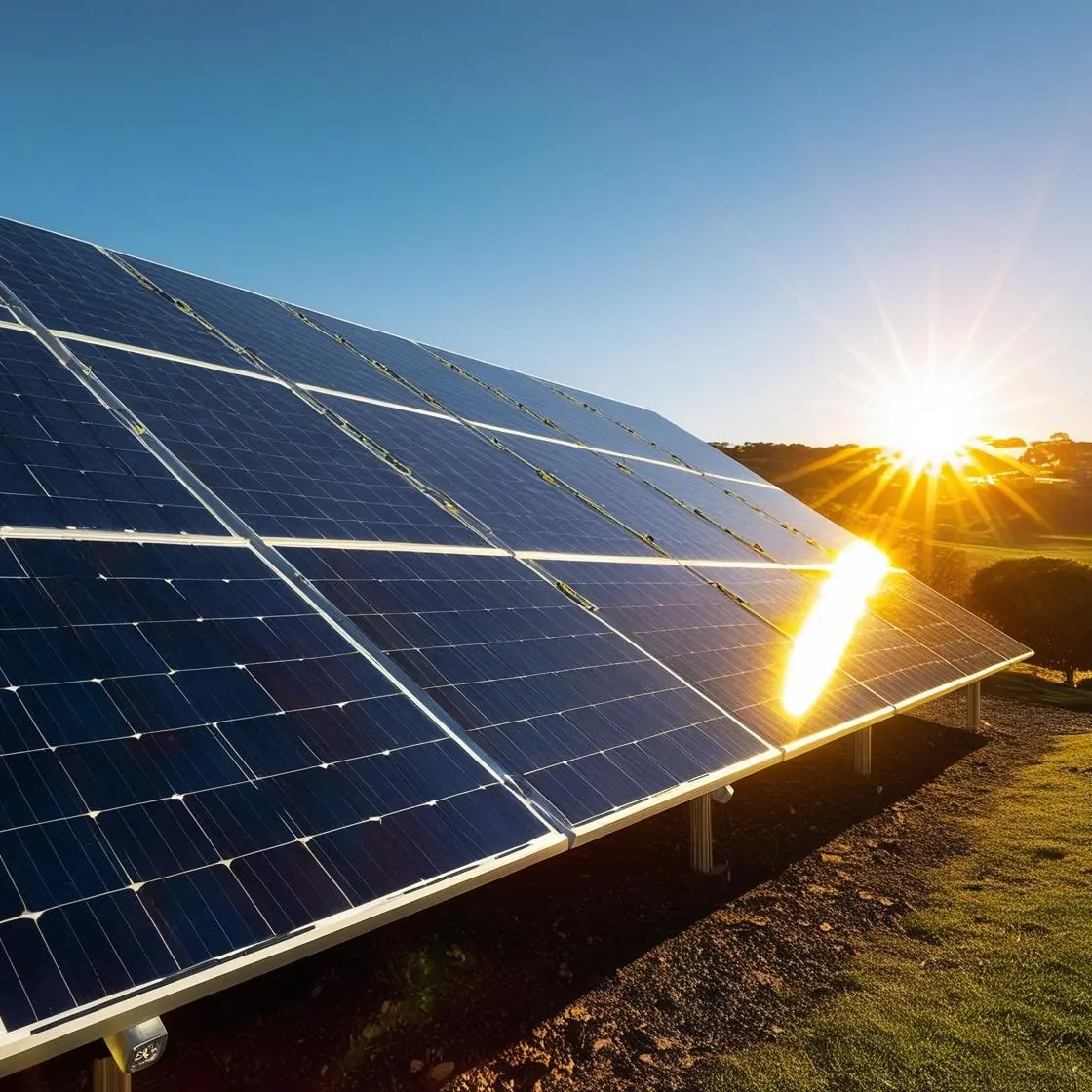
Solar Power Designed for Penrith Homes
Penrith households can have very different electricity profiles. A smaller household may want to offset everyday daytime consumption, while a larger property with air conditioning, a pool, electric hot water or future EV charging may require substantially more solar generation.
Roof layout matters too. Orientation, shading, roof pitch, usable area and existing rooftop equipment can affect how many panels can be installed and how generation is distributed throughout the day.
Our approach is to assess the property and energy requirements before recommending an appropriate solar-system size.
Why Penrith Homeowners Are Considering Solar
Rooftop solar gives a household the ability to generate electricity at the property instead of relying entirely on grid-supplied electricity during daylight hours.
Reduce Grid Consumption
Solar electricity used directly by your home can reduce the amount of electricity purchased from the grid during solar-generation hours.
Use Your Roof
Suitable rooftop space can be turned into an on-site electricity-generating asset using appropriately designed solar panels and mounting equipment.
Prepare for a Battery
A solar system can be designed with future battery storage in mind if you plan to add energy storage later.
Support Electrification
Solar planning can consider future electricity loads such as an EV, electric hot water, additional air conditioning or other appliances.
Monitor Energy
Compatible inverter monitoring can help you understand solar generation and how the system performs over time.
Solar + Storage
Battery storage can be assessed where a household wants to retain suitable surplus solar generation for later use.
What Size Solar System Is Suitable for a Penrith Home?
There is no single solar-system size that is right for every Penrith household. Your electricity consumption, available roof area, daytime usage, future energy plans and network conditions should all be considered.
Three commonly compared residential system sizes are 6.6kW, 10kW and approximately 13kW.
6.6kW Solar System
A 6.6kW system is a popular residential size to assess for households with moderate electricity requirements and suitable roof space.
The actual number of panels depends on the wattage of the solar modules selected.
Explore 6.6kW Solar Systems →10kW Solar System
A 10kW solar system may suit larger homes, households with higher electricity consumption or properties preparing for additional electrical loads.
Available roof area and network requirements should be assessed before selecting this capacity.
Explore 10kW Solar Systems →13kW Solar System
A larger approximately 13kW solar system may be worth assessing for high-consumption households with enough suitable roof area.
It can also be relevant where future electrification or battery charging is part of the household energy plan.
Explore 13kW Solar Systems →6.6kW vs 10kW vs 13kW Solar in Penrith
| System Size | Potential Application | Key Factors to Check |
|---|---|---|
| 6.6kW | Moderate residential electricity requirements. | Daytime usage, roof space, panel wattage and inverter configuration. |
| 10kW | Larger homes and higher electricity consumption. | Available roof area, phase configuration, network requirements and future loads. |
| 13kW | High-consumption households with substantial usable roof space. | Energy profile, solar exports, battery plans, electrical infrastructure and network conditions. |
Residential Solar Installation in Penrith NSW
A residential solar installation begins with understanding how the household uses electricity and whether the property has suitable space for the proposed system.
Important design considerations can include:
- Recent household electricity consumption
- Daytime versus evening electricity usage
- Available north, east and west-facing roof areas
- Roof pitch and roofing material
- Shading from trees or neighbouring structures
- Existing rooftop equipment and obstructions
- Single-phase or three-phase electricity supply
- Inverter location and cable routes
- Potential future solar battery storage
- Future EV charging or home electrification
Learn more about our residential solar solutions for Australian homes.
How Much Electricity Can Solar Panels Produce in Penrith?
Solar generation varies throughout the year and should be modelled for the individual property. System capacity alone does not determine exactly how much electricity a home will receive.
Actual production can be affected by:
Panel Orientation
Different roof orientations can change when the solar system generates the greatest amount of electricity during the day.
Shading
Trees, neighbouring properties, chimneys and other roof obstructions can reduce solar exposure at different times.
Panel Efficiency
Panel wattage, efficiency and the amount of usable roof space influence the total capacity that can be installed.
Season
Solar production changes through the year as daylight hours and the position of the sun change.
Temperature
Solar-module performance is influenced by cell temperature as well as the amount of sunlight reaching the panels.
System Losses
Inverter conversion, cabling, soiling and other system factors influence real-world production.
Why Solar Self-Consumption Matters
Solar panels generate electricity during daylight hours. When that electricity is consumed immediately by the property, it can replace electricity that would otherwise have been purchased from the grid at that time.
This is known as solar self-consumption.
Households with substantial daytime electricity use may naturally consume more solar directly. Other households may consider shifting flexible loads into solar-generation hours or assessing battery storage for suitable surplus generation.
Solar Battery Installation in Penrith
A solar battery can store suitable surplus electricity generated by rooftop solar so that energy is available for use later when solar generation is lower.
Battery storage may be worth assessing if your Penrith home regularly exports surplus solar during the day while continuing to purchase significant electricity from the grid in the evening.
The right battery size should be based on actual solar surplus and household electricity consumption. A bigger battery is not automatically the better choice if there is not enough available energy to charge it regularly.
Explore our complete solar battery range or compare individual battery options below.
2026 Solar Battery Incentives for Penrith Households
Eligible Penrith households installing battery storage may be able to access the Australian Government’s Cheaper Home Batteries Program.
The program provides support through Small-scale Technology Certificates (STCs) for eligible battery installations connected with new or existing solar PV.
Eligible battery systems can have a nominal capacity from 5kWh to 100kWh, with STCs available for the first 50kWh of usable capacity, subject to the applicable program requirements.
| 2026 Battery Capacity Band | STC Factor Treatment |
|---|---|
| 0–14kWh usable capacity | Applicable STC factor is applied at 100%. |
| Above 14kWh to 28kWh | Applicable factor is applied at 60% for this capacity band. |
| Above 28kWh to 50kWh | Applicable factor is applied at 15% for this capacity band. |
For eligible installations from May through December 2026, the applicable base STC factor is 6.8.
Solar STCs for Penrith NSW
Eligible rooftop solar PV installations can receive support through Australia’s Small-scale Renewable Energy Scheme (SRES). The financial benefit is commonly reflected in the quoted system price when the customer assigns the right to create the relevant Small-scale Technology Certificates.
Eligibility depends on the system, approved equipment, installation requirements and the rules applying when the system is installed.
The number and value of certificates should therefore be confirmed as part of the individual solar quotation rather than treated as a fixed rebate amount.
How to Choose Solar Panels for a Penrith Home
Solar-panel selection should balance performance, available roof area, product support, warranty terms and overall system design.
Panel Wattage
Higher-wattage modules can reduce the number of panels needed to achieve a particular array capacity, although panel dimensions also matter.
Efficiency
Higher module efficiency can be useful where roof space is limited and more generating capacity is required from the available area.
Product Warranty
Review the current product warranty and understand who provides support if an equipment issue occurs.
Performance Warranty
Understand the manufacturer’s stated long-term performance terms rather than comparing only the headline warranty period.
Roof Suitability
Panel dimensions and layout should work with the usable roof area, required clearances and existing rooftop equipment.
Complete System
Solar panels should be evaluated as part of the complete system together with the inverter, mounting, electrical design and installation.
Choosing a Solar Inverter for Your Penrith Property
The inverter is a central component of a grid-connected solar system. It converts DC electricity produced by the solar panels into AC electricity suitable for use by the property.
Inverter selection should consider the solar-array design, phase configuration, monitoring requirements and whether battery storage is being installed now or may be added later.
If a battery is part of your plans, discussing this before selecting the inverter can help ensure the overall solar-and-storage design is considered together.
Solar Panels With Battery Storage in Penrith
Installing solar panels and battery storage together allows the solar array, inverter and storage capacity to be considered as one energy system.
This approach can be useful for households that want to increase solar self-consumption, prepare for greater future electricity use or assess backup functionality.
- Solar array sized around current and future consumption
- Battery sized around available solar surplus
- Compatible inverter and battery configuration
- Monitoring considered as part of the system
- Backup requirements discussed before installation
- Future EV charging considered where relevant
Can a Solar Battery Provide Blackout Backup?
A home battery does not automatically mean every circuit in the house will continue operating during a grid outage.
Backup capability depends on the selected battery, inverter, compatible backup equipment, system output and electrical configuration.
If blackout backup is important to your household, discuss it before accepting a quote so the proposed system clearly identifies which circuits are intended to operate during an outage.
How Much Do Solar Panels Cost in Penrith?
Solar installation prices in Penrith vary according to system capacity, panel and inverter selection, roof design, switchboard condition, installation access and the electrical work required.
Rather than comparing quotes only by their headline price, review what is included in the complete installed system.
| Cost Factor | Why It Matters |
|---|---|
| System Size | Larger solar arrays require additional panels, mounting and associated equipment. |
| Panel Selection | Panel brand, wattage, efficiency and warranty terms can influence system cost. |
| Inverter | Inverter type, capacity, monitoring and battery compatibility can affect pricing. |
| Roof Design | Multiple roof faces, difficult access and roof material can influence installation complexity. |
| Switchboard | Electrical upgrades may be required at some properties before or during installation. |
| Battery Storage | Adding a battery, backup equipment or additional electrical work changes the overall project price. |
What Should a Penrith Solar Quote Include?
When comparing solar installers or system proposals, make sure you understand the complete scope rather than comparing only the final price.
- Proposed solar-system capacity
- Solar panel manufacturer and model
- Panel quantity and wattage
- Inverter manufacturer and model
- Proposed panel layout
- Estimated annual solar generation
- Mounting equipment
- Electrical and installation work included
- Any switchboard work included or excluded
- Monitoring setup
- Applicable STC assumptions
- Product warranties
- Installation workmanship warranty information
- Battery and backup inclusions where relevant
Solar Panel Installation Process in Penrith
Energy Review
Review electricity consumption, daytime usage and future household energy requirements.
Property Assessment
Consider available roof area, orientation, shading, access and relevant electrical infrastructure.
System Design
Select an appropriate solar capacity, panel layout, inverter and battery configuration where required.
Approvals
Address applicable network, metering and installation requirements for the proposed system.
Installation
Install the panels, inverter, mounting system and associated electrical equipment.
Commissioning
Complete system testing, commissioning and available monitoring configuration.
Solar Installation Around Penrith & Western Sydney
Australian Design Solar welcomes solar and battery enquiries from Penrith and surrounding Western Sydney communities. Installation availability and system requirements should be confirmed for the individual property.
Residential & Business Solar in Penrith
Residential solar is typically designed around household electricity consumption, roof space and future energy requirements. Commercial solar projects require a different assessment because operating hours, interval consumption, demand charges and larger electrical infrastructure may be involved.
If you operate a business in the Penrith area, provide recent electricity information and details about the commercial property so an appropriate system capacity can be assessed.
Why Good Solar System Design Matters
The number printed on the solar-system package is only one part of the installation. Two homes with the same nominal solar capacity can experience different generation profiles because of their roof orientation, shading and equipment configuration.
A professional design should consider:
- How much electricity the household currently uses
- When that electricity is consumed
- How much usable roof space is available
- Where panels can be positioned
- Potential shading throughout the year
- Appropriate inverter configuration
- Existing electrical infrastructure
- Future battery requirements
- Future EV or home-electrification plans
Explore Solar & Battery Solutions
Use these guides to compare residential solar-system sizes and battery-storage options before requesting your Penrith solar quotation.
Solar Panels Penrith NSW – FAQs
Are solar panels worth installing in Penrith NSW?
Solar can be worth assessing where a Penrith property has suitable roof space and electricity consumption that can be offset by daytime solar generation. The financial outcome depends on system cost, generation, electricity tariffs, self-consumption and export arrangements.
What size solar system is best for a Penrith home?
There is no single best size for every property. Common residential options include 6.6kW, 10kW and approximately 13kW systems. The appropriate capacity depends on electricity consumption, available roof area, phase configuration, future energy needs and network requirements.
How much do solar panels cost in Penrith?
The installed cost varies according to solar-system size, panel and inverter selection, roof design, switchboard requirements and installation complexity. A property-specific quotation provides a more meaningful price than a generic package figure.
How many solar panels do I need?
Panel quantity depends on the target solar-system capacity and wattage of the selected modules. Higher-wattage panels generally require fewer modules to achieve the same nominal array capacity.
Can I add a solar battery to an existing system in Penrith?
In many cases battery storage can be added to an existing solar installation, but the existing inverter, solar-array capacity, electrical configuration and switchboard should be assessed before selecting a battery.
What battery size should I install?
Battery sizing should consider the amount of surplus solar available for charging and how much electricity the household uses outside solar-generation hours. Larger storage is not automatically more beneficial if the available capacity cannot be used effectively.
Is there a battery incentive available in Penrith in 2026?
Eligible households may access the federal Cheaper Home Batteries Program. Eligible batteries can range from 5kWh to 100kWh nominal capacity, with STCs available for the first 50kWh of usable capacity, subject to all applicable program requirements.
Can a battery keep my Penrith home running during a blackout?
Backup capability depends on the battery, inverter, backup equipment and electrical design. A battery installation should clearly identify whether blackout backup is included and which circuits can operate during an outage.
Can I install solar and a battery at the same time?
Yes. Installing both together allows solar-array capacity, inverter selection, battery capacity and household consumption to be considered as part of one energy-system design.
Do solar panels still generate electricity on cloudy days?
Solar panels can still generate electricity under cloudy conditions, although production is generally lower than during strong direct sunlight. Actual output varies with cloud cover and other environmental conditions.
Should I choose a 6.6kW or 10kW solar system?
A 6.6kW system may suit households with moderate requirements, while a 10kW system may be worth assessing for higher electricity consumption or future energy loads. Roof space, electricity usage and network requirements should determine the final choice.
Can I install a 13kW solar system in Penrith?
A larger approximately 13kW solar system may be possible where the property has sufficient usable roof area and the proposed configuration satisfies relevant electrical and network requirements.
Do you install solar panels around the wider Penrith area?
Australian Design Solar welcomes enquiries from Penrith and surrounding Western Sydney areas. Contact the team with your postcode so installation availability and project requirements can be confirmed.
How can I get a solar quote in Penrith?
Provide your postcode, recent electricity usage, property details and whether you are considering solar panels, battery storage or both. This information helps prepare a more relevant system assessment and quotation.
Get a Solar Panels Penrith NSW Quote
Planning solar panels or battery storage for your Penrith property? Australian Design Solar can assess your electricity requirements, roof space, preferred system size and future energy plans to prepare a tailored solar or solar-and-battery proposal.