
Australian Design Solar • NSW battery guide
How Much Does a Solar Battery Cost in NSW? 2026 Price Guide
Compare battery prices by capacity, understand installation extras and find out what to check before choosing storage for your NSW home. Start with your electricity use, then compare a complete installed quote.
Updated 8 September 2026 • Prices in Australian dollars
Solar battery prices in NSW: a quick starting guide
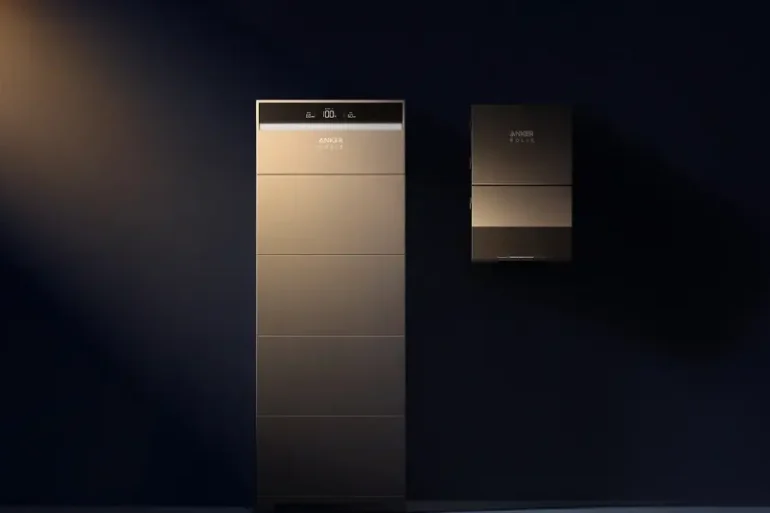
Australian Design Solar publishes selected Fox ESS battery packages from $5,999 installed*, with Anker SOLIX X1 offers from $6,999 for 10kWh, $8,499 for 15kWh and $11,999 for 20kWh*. These are advertised package starting points, not NSW-wide average prices. A property assessment is needed to confirm your final installed cost.
| Battery option | Starting price* | Important comparison point |
|---|---|---|
| Selected Fox ESS packages | From $5,999 installed | Confirm the exact model, capacity and inverter included in the offer. |
| Anker SOLIX X1 10kWh | From $6,999 installed | Assess available solar surplus and evening electricity use. |
| Anker SOLIX X1 15kWh | From $8,499 installed | Check whether the extra capacity will be used regularly. |
| Anker SOLIX X1 20kWh | From $11,999 installed | Compare usable storage, output and the intended backup reserve. |
| Other capacities, brands or backup designs | Personalised quote | Price the exact equipment and electrical work for your property. |
*Published starting offers checked on 8 September 2026. Availability, NSW installation suitability and final pricing require confirmation. Ask for a written total including GST, the price before incentives, any discount applied and all inclusions and exclusions. Do not deduct a rebate again if it is already included. Battery capacity labels do not necessarily represent usable capacity. Inverter replacement, backup hardware, switchboard work, extra cabling and solar panels are included only when specified in your quote.
Get a solar battery quote for your NSW home
Share your postcode and contact details. Have a recent electricity bill and your solar inverter model ready, if available, so we can discuss a battery that suits your property.
You can also use our solar and battery quote page.
What are you paying for when you buy a home battery?
A battery stores energy for later use. In a solar home, it can shift surplus daytime generation into the evening, reducing the electricity you need to purchase during those hours.
The purchase involves more than a battery cabinet. Your quote needs to cover the connection design, compatible power conversion equipment, required electrical work and commissioning.
Ask for usable capacity as well as the advertised capacity. Reserve settings and conversion losses affect the energy available to your appliances.

What affects solar battery installation cost in NSW?
A lower headline price is useful only when you know what it includes. Compare these details across every proposal.
Battery size and equipment
Request the battery model, number of modules, usable storage and inverter model. Compare the complete configuration, especially when two brands use different module sizes.
Existing solar compatibility
An assessment should establish whether your current inverter can remain, needs replacement or requires a separate battery inverter. “Battery ready” is not enough to confirm compatibility with every product.
Backup circuits and output
Identify what you want running during an outage. Supplying a fridge, lights and internet is a different requirement from operating cooking appliances and large air conditioners together.
Installation location and electrical work
Cable distance, switchboard condition, access and the proposed battery position affect the scope. Send clear photographs so the installer can identify likely extras before finalising the price.
For a three-phase property, ask exactly which phases the battery supplies in normal operation and during an outage. Do not assume a battery connected to a three-phase home provides three-phase backup.
What size solar battery should you choose?
Match storage to the electricity you want to shift into non-solar hours. Start with smart-meter interval data or monitoring records showing daytime exports and evening imports, then consider your desired backup reserve.
| Capacity to investigate | Reason to consider it | Check before buying |
|---|---|---|
| Around 5kWh | Modest evening demand or a limited storage budget. | Whether a small system still meets your output and backup goals. |
| Around 10kWh | A balance between storage capacity and initial cost. | How often you can charge and use that amount of energy. |
| Around 13–15kWh | More evening consumption or a larger reserve requirement. | Winter charging potential and the additional cost per usable kWh. |
| Around 20kWh or more | Substantial overnight demand or a deliberate larger backup reserve. | Whether the extra capacity will sit unused for long periods. |
These are assessment categories, not promises of suitability. Household size alone is a poor sizing tool. A home with people using appliances during the day may need less storage than a smaller household using most electricity after sunset.
An EV also changes the calculation. Charging directly from daytime solar may leave more of the home battery available for evening appliances.
NSW solar battery rebates and incentives in 2026
Federal battery installation discount
Eligible installations may receive a discount through the Australian Government’s Cheaper Home Batteries Program. It uses small-scale technology certificates, or STCs, and depends on equipment eligibility, usable capacity and installation timing.
From 1 May 2026, the applicable STC factor is weighted at 100% for the first 14kWh of usable capacity, 60% for capacity above 14kWh up to 28kWh, and 15% for capacity above 28kWh up to 50kWh. These are calculation weightings, not percentages taken off the retail price.
NSW virtual power plant incentive
Eligible NSW households may also receive an incentive for connecting a battery to a virtual power plant. From 1 July 2026, eligible battery sizes extend up to 50kWh. The payment calculation is capped at 28kWh made available to the grid and varies by provider and contract.
The VPP incentive can be combined with the federal battery discount when both sets of conditions are met. It is claimable once per National Metering Identifier. Check payment timing, retailer compatibility and the provider’s access to your battery before signing.
Incentive information checked on 8 September 2026. Eligibility and offer values must be confirmed for your installation. Business and shared-apartment projects require a separate assessment.
Compare solar battery brands for your NSW property
Use the following guides to shortlist options, then compare exact models. Brand names alone do not establish capacity, inverter compatibility or blackout performance.
Battery guides
- Sungrow solar battery options — check the proposed modules and compatible inverter.
- Alpha ESS battery systems — compare usable storage and installation scope.
- SAJ solar battery prices — request an equipment-specific proposal.
- Fox ESS battery prices — confirm capacity and inclusions for the starting offer.
- Sigenergy battery guide for Canberra — use for product comparison, then request NSW-specific installation pricing.
For Anker SOLIX X1, compare the 10kWh, 15kWh and 20kWh starting references above against your expected daily use.

Adding a battery to solar or buying both together
For existing solar, compare the proposed retrofit with the performance and remaining suitability of your current inverter. For a new installation, design the panels, battery and inverter together around your daytime and overnight loads.
| Explore solar sizes | Battery planning question |
|---|---|
| 6.6kW solar system | How much generation remains for charging after daytime use? |
| 10kW solar system | How closely does seasonal solar surplus match the proposed battery? |
| 13kW solar system | Will additional storage meaningfully reduce evening imports? |
| 20kW solar system | What battery output and capacity match the property’s load profile? |
| 30kW solar system | How much energy is already consumed by daytime business activity? |
| 50kW solar system | Does storage serve evening demand, backup or another measurable business need? |
There is no fixed panel-to-battery ratio that suits every NSW property. Shade, roof orientation, seasonal generation and daytime consumption all influence the energy available to store.
Is a solar battery worth it in NSW?
A battery can make financial sense when the value of electricity purchases avoided exceeds the cost of charging and owning the system. It becomes harder to justify extra capacity that is rarely used.
A transparent savings example
Assume a household sends 10kWh of surplus solar into its battery each day. At an illustrative 90% round-trip efficiency, it receives 9kWh back. Assume an avoided import price of $0.35/kWh and a forgone feed-in tariff of $0.05/kWh.
Daily energy saving = (9 × $0.35) − (10 × $0.05) = $2.65.
Repeating this every day gives approximately $967 per year. With a hypothetical net installed cost of $7,000, simple payback would be around 7.2 years.
This is an arithmetic example, not a current tariff offer or savings forecast. It excludes financing, degradation, maintenance, tariff changes and seasonal variation. Fixed supply charges generally remain. Actual performance should be modelled using your consumption and export records.
Backup is a separate benefit. Reserving more charge for outages can leave less available for everyday savings, so include that preference in your assessment.
Battery quote enquiries across NSW
Share your postcode so we can confirm installation availability and the scope for your location. We welcome enquiries from Sydney, Western Sydney, the Hills District, South Western Sydney and surrounding NSW areas.
Sydney and surrounding suburbs
Parramatta, Blacktown, Penrith, Castle Hill, Kellyville, Baulkham Hills, Rouse Hill, Liverpool, Campbelltown, Ryde, Epping, Hornsby and Chatswood.
Coastal and regional enquiries
For Newcastle, the Central Coast, Wollongong, the Illawarra and other NSW locations, include your address or postcode so availability, travel requirements and site conditions can be assessed.
Location alone does not determine the price. Two homes in the same suburb can require different cable runs, backup equipment and switchboard work.
Prepare for a useful battery consultation
- Collect your usage information: a recent bill and interval data if available.
- Identify existing equipment: solar size, inverter model and monitoring access.
- Show the installation area: photographs of the switchboard and possible battery location.
- Set your priorities: bill savings, selected backup circuits or future electricity needs.
- Compare written scope: equipment, usable capacity, output, incentives, exclusions and warranty support.
Australian Design Solar can help you discuss these requirements and request a proposal for your property.
Solar battery cost NSW: frequently asked questions
How much does a solar battery cost in NSW?
Australian Design Solar publishes selected packages from $5,999 installed, subject to confirmation and property assessment. Capacity-specific Anker references include 10kWh from $6,999, 15kWh from $8,499 and 20kWh from $11,999. Compare the complete installed scope and incentive assumptions.
How much is a 10kWh solar battery?
The published Anker SOLIX X1 10kWh starting reference is $6,999 installed, subject to confirmation. Other brands and installation designs require separate quotes. Check usable storage, inverter and backup inclusions.
Is the cheapest battery package the best value?
Only if it meets your requirements at a clearly stated total price. Compare usable capacity, output, installation extras, warranty conditions and expected use before choosing.
Can I add a battery to my existing solar panels?
A retrofit may be possible. An installer needs to assess the current inverter, electrical installation and proposed battery configuration before confirming compatibility and cost.
Will a battery work during a blackout?
Only if the installation supports backup operation. Ask which circuits and phases are supplied, how much power is available and whether solar can recharge the battery during an outage.
Do I have to join a virtual power plant?
Claiming the NSW VPP incentive requires an eligible VPP arrangement. Do not confuse that offer with the separate federal installation discount. Ask the provider to explain the participation requirements attached to each discount in your quote.
Can I receive both the federal discount and NSW VPP incentive?
They can be combined when you meet the conditions for both. Request written confirmation of eligibility and payment timing, and ensure the same benefit has not been counted twice.
How long will my battery last?
Service life depends on the model, temperature, operating settings and energy throughput. Read the specific warranty for its term, retained-capacity commitment and exclusions instead of relying on a generic lifespan claim.
Will a solar battery eliminate my electricity bill?
Not necessarily. You may still import electricity during low-solar periods or when demand exceeds battery output or stored energy. Supply charges and other retailer charges can also remain.
Can I increase battery capacity later?
Some systems support expansion within manufacturer limits. Confirm compatible modules, permitted timing, inverter limits and the cost of later installation before depending on future expansion.
Find out what a battery would cost at your NSW home
Get a proposal based on your electricity use, solar equipment and backup preferences. Compare the full installed price before deciding.
Pricing and information notes
This guide was updated on 8 September 2026. Published prices are starting references and require confirmation for your NSW property. Incentives depend on eligibility and installation timing. Savings examples are explanatory calculations and do not guarantee a financial outcome.
See our Fox ESS price guide and Anker SOLIX X1 package guide, or request current pricing.