
1300 85 1919
Call us today!
A practical 2026 guide to solar battery prices in Sydney, including installed costs, battery sizes, government incentives, popular battery brands and the factors that determine what you will actually pay.
Australian Design Solar supplies tailored solar battery solutions for Sydney households looking to store more rooftop solar and reduce their dependence on grid electricity.
Tell us about your home, existing solar system and energy requirements. We can recommend a suitable battery size and configuration.
In 2026, a residential solar battery in Sydney can start from around $5,999 installed* for a smaller system. Indicative starting prices increase with usable storage capacity, with larger 15kWh and 20kWh systems commonly requiring a higher investment.
Your actual solar battery installation price depends on the battery brand, usable capacity, inverter compatibility, backup configuration, switchboard condition, installation location, electrical work and any applicable government incentive.
| Battery Capacity | Indicative Starting Price* | Typical Application |
|---|---|---|
| 5kWh | From approx. $5,999 | Smaller homes and lower evening consumption |
| 10kWh | From approx. $7,999 | Average family households |
| 13kWh | From approx. $8,999 | Medium to larger homes |
| 15kWh | From approx. $10,999 | Higher evening and overnight consumption |
| 20kWh | From approx. $13,999 | Large homes, pools, EVs and high electricity usage |
| 25–30kWh+ | Custom quotation | High-consumption and larger properties |
*Indicative starting prices only and subject to system configuration, battery model, site conditions, eligibility, electrical requirements and available incentives. Request a site-specific quotation before making a purchasing decision.
Comparing batteries only by their advertised price can be misleading. Two Sydney homeowners buying batteries with similar storage capacities can receive different installed prices because the electrical work and system configuration may be different.
This is why the most useful figure to compare is the complete installed battery price, not simply the cost of the battery hardware.
Battery capacity is measured in kilowatt-hours (kWh). The right capacity should be based primarily on how much electricity your household is likely to use when your solar panels are producing little or no electricity.
A larger battery is not automatically a better investment. If your solar system cannot regularly recharge it, or your household does not use the stored electricity, part of the battery capacity may deliver limited additional value.
Smaller Homes
May suit couples, smaller households and homes with modest evening electricity use.
Family Homes
A practical range for many households wanting to shift substantial daytime solar generation into the evening.
High Energy Use
Worth considering for larger households, pools, electric cooking, ducted air conditioning and EV charging.
Eligible Sydney households may be able to reduce the upfront cost of a home battery through the Australian Government’s Cheaper Home Batteries Program.
The federal program operates through the Small-scale Renewable Energy Scheme (SRES) and provides an upfront discount for eligible battery installations connected with new or existing rooftop solar.
The value of battery support reduces over time, so homeowners should check the incentive applicable on their actual installation date rather than relying on an old rebate estimate.
Eligible NSW battery owners may also be able to receive an incentive for connecting a compatible battery to a Virtual Power Plant (VPP). A VPP coordinates participating batteries so stored electricity can be supplied to the grid at selected times.
VPP contracts differ between providers. Before joining, compare how the provider can access your battery, available payments or bill credits, contract terms and any impact on the way you want to use your stored energy.
Battery price is only one part of the comparison. Homeowners should also consider usable storage, continuous power output, battery chemistry, warranty conditions, monitoring, backup capability, expandability and compatibility with the solar inverter.

Sungrow’s modular battery systems are an option for households looking for scalable storage and integration with compatible Sungrow hybrid inverter solutions.
Explore our Sungrow solar battery solutions for additional information.
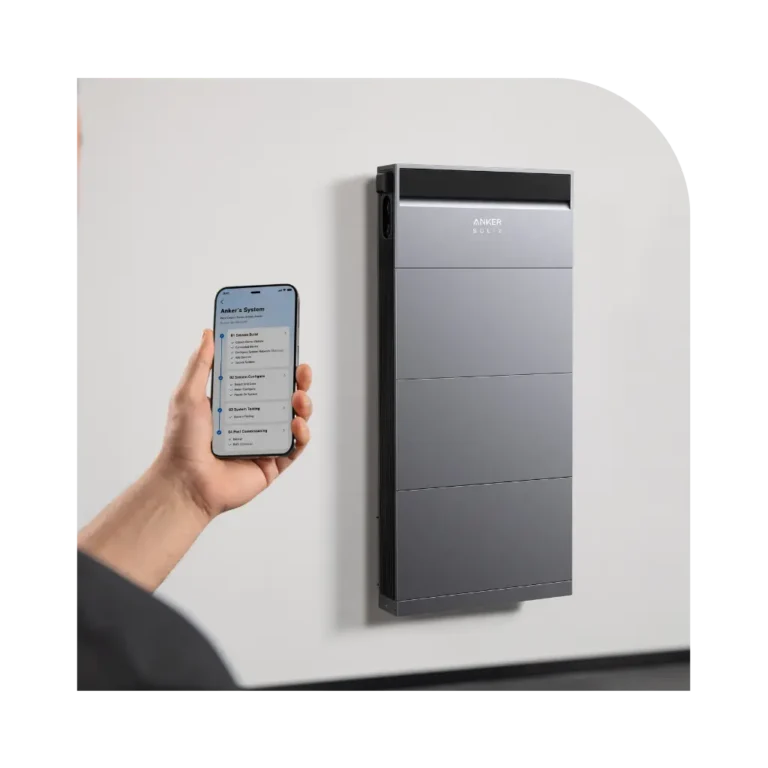
The Anker SOLIX X1 is designed around modular battery storage, making it worth considering for households that want the ability to tailor capacity to their current electricity use while allowing for future energy requirements.
A modular approach can be useful where electricity consumption may increase later through EV charging, electric hot water, induction cooking or further household electrification.

There is no single battery brand that is right for every Sydney property. Australian Design Solar can compare system options according to your solar generation, electricity consumption, budget, installation environment and backup requirements.
Residential energy storage solutions with a range of system configurations for new solar and suitable existing solar installations.
Smart battery and inverter solutions for households comparing integrated solar energy storage configurations.
Modular home energy storage options suited to homeowners comparing capacity, system integration and value.
Sigenergy offers integrated smart energy storage technology with modular configurations, monitoring and energy management functionality. Product availability and installation configuration should be confirmed for your property.
When comparing solar battery prices in Sydney, ask for a complete installed quotation. A battery hardware price by itself does not tell you what the project will ultimately cost.
Battery modules, battery management system and associated manufacturer equipment.
Cabling, protection equipment, mounting, isolation and required electrical works.
Configuration, testing, monitoring setup and handover of the completed battery system.
In many cases, yes. Sydney homeowners with an existing rooftop solar system may be able to retrofit battery storage without replacing the entire solar installation.
The most appropriate design depends on your existing inverter, solar array size, electricity consumption, available installation space and whether you want blackout backup.
An AC-coupled solution may allow a battery to be integrated with an existing solar system, while other properties may benefit from changing to a compatible hybrid inverter. The correct approach requires a system assessment.
If your existing system is relatively small compared with your household consumption, it may also be worth considering additional residential solar panels at the same time as your battery upgrade.
For a home without rooftop solar, designing the solar panels, inverter and battery as one complete energy system can simplify compatibility and allow the equipment to be sized around the same household energy profile.
A properly designed system considers how much electricity the solar array is likely to generate, how much is consumed directly during daylight hours and how much surplus energy may be available to charge the battery.
Learn more about our residential solar solutions or compare solar battery systems.
Whether a battery is financially worthwhile depends on your individual energy profile. There is no universal payback period that applies to every Sydney household.
A battery may be more useful where a household:
Not automatically. Owning a battery does not necessarily mean your home will continue operating during a grid outage.
Blackout protection requires a battery and system configuration that supports backup operation, along with the appropriate switching and electrical design.
Some households choose essential-load backup for selected circuits such as refrigeration, lighting, internet and selected power outlets. Others may investigate broader backup arrangements where technically appropriate.
Discuss your backup requirements before accepting a quote because they can affect both equipment selection and total installation cost.
The cheapest quotation is not necessarily the lowest-cost system over its operating life. Compare what is actually included and whether each proposal has been designed for the same objective.
| Check | Why It Matters |
|---|---|
| Usable capacity | Shows how much battery energy is actually available for household use. |
| Power output | Influences how much electrical load the battery can support at one time. |
| Battery chemistry | Affects system characteristics, safety and performance. |
| Warranty | Check warranty period, throughput conditions and capacity-retention terms. |
| Backup capability | Confirm whether backup is included, optional or unavailable. |
| Expandability | Important if your future energy use may increase. |
| Monitoring | Helps you understand solar generation, charging and household consumption. |
| Installed price | Provides a more meaningful comparison than battery hardware price alone. |
Review electricity consumption, existing solar generation and your energy objectives.
Match battery capacity, inverter configuration and backup requirements to the property.
Complete the electrical installation, system configuration, testing and commissioning.
Australian Design Solar provides energy solutions for different property types and electricity requirements.
Solar and battery systems designed around household electricity consumption, available roof space and future energy requirements.
Businesses have different load profiles, operating hours and energy requirements. Commercial projects require site-specific system design and financial analysis.
Choosing a solar battery involves more than selecting a brand from a price list. The battery needs to work with your property, electricity consumption, solar generation and long-term energy plans.
Recommendations based on your property and energy requirements rather than a one-size-fits-all battery package.
Compare different capacities and battery technologies to identify a suitable solution.
Solutions for new solar installations, existing solar upgrades and integrated solar-plus-battery projects.
Visit Australian Design Solar to learn more about our solar and energy storage services.
Indicative installed starting prices can begin at around $5,999* for a smaller residential battery, while larger-capacity systems cost more. Your final price depends on capacity, battery brand, inverter compatibility, backup requirements, electrical work, site conditions and applicable incentives.
Australian Design Solar publishes indicative 10kWh battery starting prices from approximately $7,999*. The final installed price depends on the selected battery, inverter configuration and site-specific electrical requirements.
A 15kWh residential battery can start from approximately $10,999* depending on the product and configuration. Larger backup requirements or additional electrical work can increase the installed cost.
Indicative 20kWh battery packages can start from around $13,999*. A site-specific quotation is required because inverter compatibility, backup equipment, switchboard work and installation conditions affect the final cost.
Eligible households may receive an upfront discount through the Australian Government’s Cheaper Home Batteries Program. Eligibility and discount value depend on the battery, usable capacity, installation date and program requirements. NSW also has an incentive for eligible batteries connected to a participating Virtual Power Plant.
Often, yes. The best configuration depends on your existing inverter, solar array, switchboard, battery model and backup requirements. An assessment should be completed before selecting a battery.
Many family homes investigate batteries in the 10–15kWh range, but the correct size should be calculated from actual evening and overnight electricity consumption, available solar surplus and future energy requirements.
Only if the battery system and electrical installation are configured for backup operation. Backup capability should be specified during system design rather than assumed from the battery alone.
Not necessarily. Oversizing can leave capacity underused if your solar system does not generate enough surplus electricity or your household does not consume enough energy after sunset. Correct sizing is generally more important than maximum capacity.
There is no single battery that is best for every property. Compare usable capacity, power output, warranty, backup capability, monitoring, expandability, inverter compatibility and installed cost before choosing a system.
Continue researching solar, battery storage and individual battery technologies:
The right battery starts with understanding how your household actually uses electricity. Australian Design Solar can assess your existing solar system, electricity consumption, storage requirements and future plans to recommend a suitable battery configuration.
Compare battery capacity, installation requirements and available options before making your investment.
Talk to Australian Design Solar