
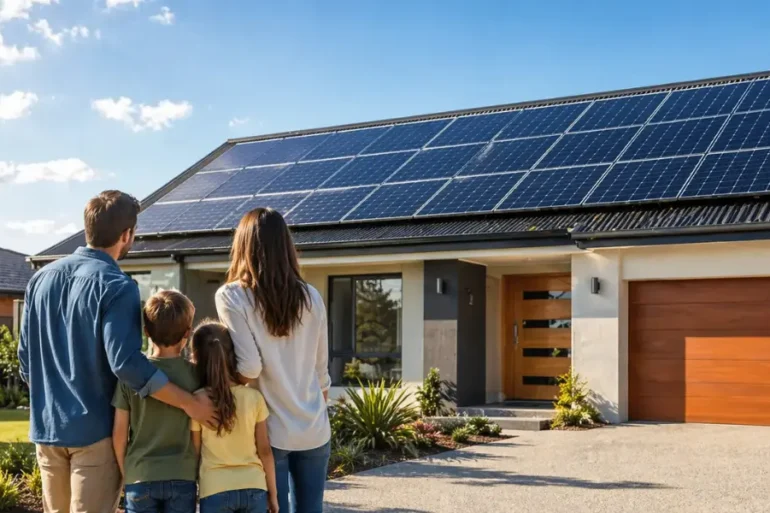
Solar Panel System Sydney – Installation, Prices & Battery Options
Looking for a professional solar panel system in Sydney? Australian Design Solar provides residential solar panel systems, solar battery storage and tailored solar-and-battery solutions for homes across Sydney.
A properly designed solar system can help reduce the amount of electricity your household purchases from the grid while making better use of your available roof space.
Whether you’re considering a 6.6kW solar system , 10kW solar system , 13kW solar system or a complete solar panel system with battery storage , our team can help you compare suitable options.

*Indicative pricing only. Final pricing depends on equipment, roof conditions, electrical requirements, available incentives and installation complexity.
How much does a solar panel system cost in Sydney?
The solar panel system price Sydney homeowners pay depends on system capacity, panel and inverter selection, roof conditions, switchboard requirements and installation complexity.
| Solar system size | Indicative installed price* | Typically suitable for |
|---|---|---|
| 3kW–5kW solar system | $3,000–$5,500 | Small homes and lower electricity consumption |
| 6.6kW solar system | $3,999–$6,500 | Small to medium households |
| 10kW solar system | $6,000–$9,500 | Medium to large households |
| 13kW / 13.2kW solar system | $8,000–$12,500 | Larger and high-energy households |
| 15kW solar system | $10,000–$16,000+ | High-consumption residential properties |
| 20kW+ solar system | Custom quotation | Very large homes and commercial properties |
*Indicative pricing only. Your final solar panel system price can vary according to panel and inverter selection, roof design, switchboard condition, electricity supply, site access and installation requirements.
Get your Sydney solar system price
Tell us about your property and electricity requirements. Our team can recommend an appropriate system size and provide a tailored solar quotation.
What is included in a Sydney solar panel system?
A complete rooftop solar installation includes much more than the solar panels themselves.
Depending on the proposed system, your quotation may include:
- Solar panels
- Solar inverter
- Roof mounting system
- DC and AC cabling
- Electrical protection equipment
- System design
- Professional installation labour
- Electrical connection work
- System commissioning
- Monitoring configuration
- Applicable STC benefit
- Manufacturer warranties
- Workmanship warranty
What affects solar panel system prices in Sydney?
Two homes installing the same nominal solar-system capacity can receive different quotations because every property has different roof and electrical requirements.
Solar system capacity
Larger systems require more panels, mounting equipment and inverter capacity, increasing the upfront cost.
Solar panel quality
Pricing varies by panel manufacturer, wattage, efficiency, technology, product warranty and performance warranty.
Solar inverter
String, hybrid, three-phase and microinverter systems can have different equipment and installation costs.
Roof construction
Tile versus metal roofing, roof pitch, building height and multiple roof faces can affect installation complexity.
Electrical upgrades
Older switchboards or other electrical infrastructure may need upgrading before the solar system is connected.
Shading and layout
Trees, chimneys and neighbouring buildings can affect panel positioning and may influence equipment selection.
Which solar panel system size is best for a Sydney home?
Choosing the correct solar-system capacity is one of the most important parts of system design. The right size should reflect your current electricity consumption and future energy needs.
6.6kW solar system Sydney
A 6.6kW solar system remains a common option for small and medium Sydney households.
Typical estimated generation may be around 24–28kWh per day, although actual generation varies by season and installation.
- Small to medium families
- Approximately 2–4 occupants
- Moderate electricity consumption
- Reasonable daytime electricity usage
- Suitable roof space
10kW solar system Sydney
A 10kW solar system can suit medium and larger homes with greater electricity requirements.
Typical estimated generation may be around 38–45kWh per day, subject to system design and seasonal conditions.
- Larger families
- Ducted air conditioning
- Swimming pools
- Electric hot water
- Home offices
- EV charging
- Solar battery charging
13kW solar system Sydney
A 13kW or 13.2kW solar system can suit larger and high-energy homes.
Typical estimated generation may be around 50–60kWh per day, depending on panel orientation, weather, shading and equipment.
- Large family homes
- All-electric properties
- Multiple air-conditioning systems
- Pool pumps and heating
- EV charging
- Solar battery storage
Should I install the largest solar system possible?
Not automatically. Installing more solar panels than your property needs does not always deliver the best financial outcome.
Professional system sizing should consider:
- Annual electricity consumption
- Daytime versus evening usage
- Available roof space
- Solar export limits
- Current electricity tariff
- Future battery storage
- EV charging
- Future household electrification
How much electricity can solar panels generate in Sydney?
Sydney offers favourable conditions for rooftop solar, but production changes throughout the year.
Actual solar generation depends on:
- Solar-system capacity
- Panel orientation
- Roof angle
- Shading
- Seasonal conditions
- Panel efficiency
- Inverter efficiency
- Temperature
- Normal system losses
Summer months generally provide longer solar-production periods, while winter days are shorter. Daily production values should therefore be treated as estimates rather than guaranteed output.
Which roof direction is best for solar panels in Sydney?
North-facing solar panels generally provide strong annual generation in Sydney, but north-facing roof space is not essential.
East-facing panels produce a greater proportion of electricity earlier in the day.
West-facing panels shift more solar generation towards the afternoon.
An east-west solar system can spread production across a broader portion of the day and may better align with household electricity consumption.
Do solar panels work on cloudy days?
Yes. Solar panels continue to produce electricity from available sunlight during cloudy weather.
Generation is normally reduced compared with clear, sunny conditions, but production does not necessarily stop.
Is a solar panel system worth it in Sydney?
For many households, rooftop solar can reduce the amount of electricity purchased from the grid.
Solar electricity produced and used directly within your property can be particularly useful because it replaces electricity that would otherwise need to be purchased from your retailer.
The financial outcome depends on:
- System purchase price
- Solar production
- Household electricity consumption
- Daytime solar self-consumption
- Retail electricity tariffs
- Solar export tariffs
- Roof orientation
- Shading
- Battery storage
Solar self-consumption and why it matters
Solar self-consumption is the proportion of electricity generated by your panels that is used directly within your property.
Solar electricity can be used to operate:
- Air conditioning
- Washing machines
- Dishwashers
- Pool pumps
- Electric hot-water systems
- Home-office equipment
- Electric vehicle chargers
- General household appliances
Scheduling suitable appliances during solar-production hours can increase the amount of solar electricity consumed directly rather than exported to the grid.

Solar panels with battery Sydney
Many Sydney homeowners are considering solar panels with battery storage to make greater use of their own solar electricity.
During daylight hours, solar panels generate electricity that can first be used by your home.
Eligible surplus electricity can then be stored in a compatible solar battery and used later, including during the evening and overnight.
Battery storage may help:
- Increase solar self-consumption
- Store surplus daytime generation
- Reduce evening grid electricity consumption
- Support household electrification
- Support EV charging
- Provide compatible backup functionality where configured
How much does a solar battery cost in Sydney?
Battery pricing varies according to usable capacity, manufacturer, power output, inverter requirements, backup configuration and installation complexity.
| Battery capacity | Indicative installed price* | Typical application |
|---|---|---|
| 5kWh | From approximately $5,999 | Smaller households |
| 10kWh | From approximately $7,999 | Average households |
| 13kWh | From approximately $8,999 | Medium to larger households |
| 15kWh | From approximately $10,999 | Higher evening electricity use |
| 20kWh | From approximately $13,999 | Large households |
| 25kWh–30kWh+ | Custom quotation | High-consumption properties |
*Indicative pricing only. Actual battery pricing depends on manufacturer, usable capacity, inverter compatibility, backup configuration and site-specific installation requirements.
Compare solar battery options for Sydney homes
The best battery for your property depends on usable capacity, inverter compatibility, output, backup requirements, warranty and budget.
How do I choose the right solar battery size?
Battery sizing should take your household electricity profile into account.
Important factors include:
- Average daily electricity consumption
- Evening and overnight electricity use
- Available surplus solar generation
- Solar-system capacity
- Usable battery capacity
- Charge and discharge power
- Backup requirements
- Single-phase or three-phase electricity supply
- EV charging
- Future household energy consumption
Solar panels only or solar panels with battery?
Solar panels may suit you if:
- You use significant electricity during daylight hours
- You want a lower initial investment
- You can shift suitable appliances into solar-production hours
- You may add battery storage later
Solar + battery may suit you if:
- You use substantial electricity after sunset
- You produce significant surplus solar electricity
- You want greater solar self-consumption
- You want compatible backup functionality
- You expect household electricity consumption to increase
Choosing solar panels for a Sydney home
Solar-panel wattage should not be the only factor used to select a module.
- Panel efficiency
- Product warranty
- Performance warranty
- Manufacturer history
- Australian warranty support
- Degradation characteristics
- Temperature performance
- Product certification
- Module dimensions
- Available roof space
Explore our residential solar solutions for Sydney homes.
Choosing the right solar inverter
The inverter converts the DC electricity produced by the solar panels into AC electricity that can be used throughout the property.
Common inverter configurations include:
- String inverters
- Hybrid inverters
- Three-phase inverters
- Microinverters
- String inverters with optimisers
A hybrid inverter can be particularly relevant where battery storage is planned now or in the future.
Residential solar panel installation Sydney
A professional residential solar panel installation in Sydney should begin with an assessment of the property and its electricity requirements.
Our residential solar design process can consider:
- Current electricity bills
- Annual electricity consumption
- Roof dimensions
- Roof orientation
- Shading
- Electrical supply
- Switchboard condition
- Future battery-storage plans
- EV charging
- Budget
Our Sydney solar installation process
Commercial solar panel systems Sydney
Solar is not limited to residential properties. Sydney businesses can also use commercial rooftop solar to offset electricity consumed during operating hours.
Commercial solar can suit:
- Warehouses
- Manufacturing facilities
- Offices
- Retail premises
- Schools
- Community facilities
- Workshops
- Distribution facilities
- Other commercial properties
Commercial system sizing should consider interval electricity consumption, operating hours, available roof area, tariff structure, export limits and future battery-storage requirements.
How to choose a solar installer in Sydney
Choosing the right solar installer can be just as important as selecting the solar panels themselves.
Before accepting a quotation, consider asking:
- Which exact solar-panel model is included?
- Which inverter model is included?
- Who will complete the installation?
- Are applicable installer accreditations current?
- Which product warranties apply?
- What workmanship warranty applies?
- Was the system designed around my electricity usage?
- Has shading been considered?
- Are switchboard upgrades included where required?
- Are potential additional costs disclosed?
- Is system monitoring included?
- What after-sales support is available?
Why choose Australian Design Solar for a solar panel system in Sydney?
Australian Design Solar provides residential solar, battery-storage and commercial solar solutions across Sydney.
Tailored system design
System capacity can be selected according to electricity usage, roof conditions and future energy requirements.
Residential solar options
We provide options ranging from smaller residential systems to larger configurations for high-energy homes.
Residential solar →Solar and battery systems
Solar panels, inverter and battery can be considered together as one integrated home-energy solution.
Solar + battery →Commercial solar
We also provide commercial solar-system solutions for businesses and larger properties.
Commercial solar →Professional installation
Correct mounting, cabling, electrical work, commissioning and monitoring setup are important parts of long-term system performance.
Ongoing support
Monitoring, product warranties and after-sales support should form part of a long-term solar investment.
Solar panel installation across Sydney
Australian Design Solar provides solar-system solutions across metropolitan Sydney and surrounding areas.
Contact Australian Design Solar to confirm service availability for your postcode.
Frequently asked questions about solar panel systems in Sydney
How much does a solar panel system cost in Sydney?
A residential solar installation can cost approximately $3,999–$16,000+ depending on system capacity, solar panels, inverter selection, roof conditions and electrical requirements.
What is the most popular solar system size in Sydney?
A 6.6kW solar system remains a common option for small and medium households, while 10kW systems may be more suitable for larger homes and higher electricity consumption.
How much electricity does a 6.6kW solar system produce in Sydney?
A 6.6kW system may generate approximately 24–28kWh per day under suitable conditions. Actual production varies by season, shading, orientation, weather and system efficiency.
How much does a 10kW solar system produce in Sydney?
Indicative production may be approximately 38–45kWh per day under suitable conditions, although actual output changes throughout the year.
How much does a 13kW solar system produce in Sydney?
A 13kW or 13.2kW system may generate approximately 50–60kWh per day under suitable conditions. Actual performance depends on the property and system design.
Is a 6.6kW solar system enough for my home?
It can suit many small and medium households. Homes with electric vehicles, pools, extensive air conditioning, electric hot water or battery plans may benefit from a larger system.
Is a 10kW solar system worth it in Sydney?
A 10kW system can suit higher-consumption households with sufficient roof area and suitable network conditions. The financial result depends on electricity consumption, installation cost and system design.
Should I install solar panels with a battery?
Battery storage may make sense where a household generates substantial surplus solar during daylight hours but uses considerable electricity after sunset.
Can I add a solar battery later?
In many cases, yes. If future battery storage is important, discuss compatibility before selecting your inverter and solar-system configuration.
Does solar work on cloudy days?
Yes. Solar panels continue generating electricity from available sunlight, although output is normally lower during heavy cloud cover.
Which direction should solar panels face in Sydney?
North-facing panels generally provide strong annual generation, while east- and west-facing installations can also work effectively and may better match morning or afternoon electricity use.
Can my solar system work during a blackout?
Standard grid-connected solar systems generally shut down during a grid outage. Backup functionality requires compatible battery equipment, inverter configuration and appropriate electrical design.
Should I choose the cheapest solar company?
The cheapest quotation does not automatically provide the best long-term value. Compare equipment, warranties, system design, installation quality, monitoring and after-sales support.
Get a solar panel system quote in Sydney
Choosing the right solar panel system Sydney homeowners can rely on begins with understanding how your property actually uses electricity.
Whether you’re comparing solar panel system prices in Sydney, researching a 6.6kW solar system, considering a 10kW or 13kW installation, or planning a complete solar-and-battery system, Australian Design Solar can provide a tailored recommendation.