
Unlocking the Future of Home Energy: Tesla Powerwall 3 Costs & Benefits in Australia
Tesla Powerwall 3 Price Australia: Installation Costs, Features & Benefits
Thinking about installing a Tesla Powerwall 3? Discover how much this 13.5kWh home battery may cost in Australia, what influences the installation price, how solar battery rebates work and whether Powerwall 3 is the right investment for your home.
Quick answer: As an indicative Australian budgeting range, a Tesla Powerwall 3 installation may cost approximately $14,850 to $17,000 before any applicable discounts. Actual pricing depends on installation complexity, equipment, electrical upgrades and eligibility for incentives.

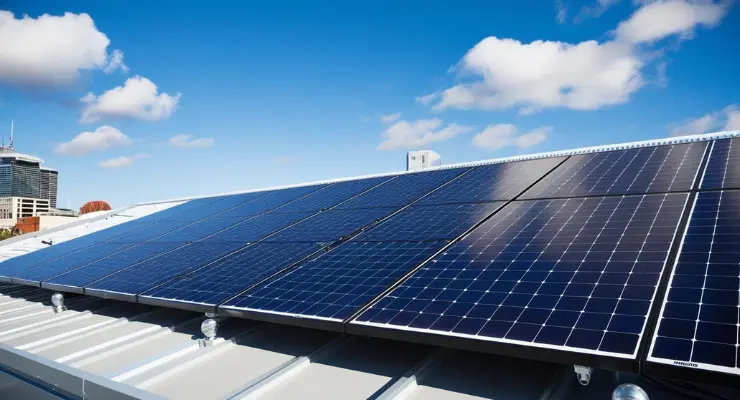
Image: Residential rooftop solar installation. Tesla Powerwall 3 battery product not pictured.
What Is the Tesla Powerwall 3?
Tesla Powerwall 3 is a rechargeable residential energy storage system designed to store electricity for use when household demand increases, solar generation falls or the electricity grid becomes unavailable.
For Australian households, the biggest advantage of battery storage is the ability to use more of the electricity generated by rooftop solar panels. Rather than exporting all unused daytime solar electricity to the grid, a compatible battery system can store a portion for evening consumption.
Powerwall 3 combines a 13.5kWh usable battery with an integrated solar inverter. Its intelligent energy management functions allow homeowners to monitor energy production, storage and consumption through the Tesla app.
The system can be considered for new solar installations and certain existing solar configurations. However, inverter compatibility, switchboard design, network requirements and backup arrangements must be assessed before installation.
How Much Does Tesla Powerwall 3 Cost in Australia?
The total cost of Tesla Powerwall 3 depends on more than the battery purchase price. A complete installation may require additional electrical equipment, protection devices, commissioning, backup configuration and modifications to an existing solar system.
The following figures are indicative budgeting estimates in Australian dollars, not confirmed current retail prices or a binding quotation.
| Cost Component | Indicative Price (AUD) |
|---|---|
| Powerwall 3 battery hardware | $11,900 – $13,250 |
| Standard installation and associated equipment | Varies by property |
| Indicative installed system total | $14,850 – $17,000 |
| Additional switchboard or electrical work | Quoted if required |
| Eligible battery incentives | Calculated individually |
Prices are illustrative estimates and may change. They are not live supplier quotations. Confirm whether GST, gateway equipment, backup circuits, installation and rebates are included in any advertised offer.
What Affects the Installed Price?
- Existing solar equipment: The type and condition of your current inverter can affect installation design.
- Switchboard condition: Older switchboards may require upgrades.
- Battery location: Cable runs, wall construction, clearances and access influence installation labour.
- Backup configuration: Whole-home backup and selected-circuit backup may require different electrical arrangements.
- Network requirements: Distribution network approvals and export limitations can affect system configuration.
- Additional equipment: Metering, protection and compatible control equipment can influence the final price.
Buying tip: Always compare fully installed quotations rather than battery hardware prices alone. Ask the installer to clearly identify inclusions, exclusions, warranties and any government battery discount.
Tesla Powerwall 3 Specifications for Australian Homes
Battery capacity, output power, efficiency and warranty are important when comparing residential storage systems. The following specifications reflect Tesla’s Australian product information.
| Specification | Tesla Powerwall 3 |
|---|---|
| Usable battery capacity | 13.5kWh |
| Battery type | Rechargeable lithium-ion storage |
| Inverter | Integrated solar inverter |
| On-grid output | Up to 10kW, subject to local configuration |
| Backup capability | Automatic backup with suitable installation |
| Solar inverter efficiency | 97.5% solar-to-grid |
| Solar inputs | 3 MPPT inputs |
| Dimensions | 1105 × 609 × 193mm |
| Weight | Approximately 130kg |
| Product warranty | 10 years, subject to warranty terms |
| Monitoring | Tesla mobile application |
| Expansion | Supported configurations up to 54kWh |
Actual output ratings and operating features depend on the approved Australian configuration. Refer to Tesla’s current local documentation before finalising system design.
Official technical information: Tesla Powerwall Australia .
Seven Benefits of Installing Tesla Powerwall 3
1. Greater Solar Self-Consumption
Store excess daytime solar energy and use it after sunset instead of relying entirely on electricity purchased from the grid.
2. Potential Electricity Bill Savings
Reduce grid purchases when stored energy replaces electricity that would otherwise be bought at higher retail rates.
3. Backup Power
A correctly configured system can supply selected or whole-home loads during outages, subject to available energy and output limits.
4. Smart Energy Monitoring
Track household electricity consumption, solar generation, battery charge and energy flows through the Tesla app.
5. Integrated Solar Inverter
The integrated inverter can simplify certain new solar and storage designs compared with systems requiring separate components.
6. Flexible Energy Management
Supported operating modes can prioritise self-consumption or respond to time-based electricity pricing.
7. Future Expansion
Compatible expansion configurations can increase available storage as household electricity requirements change.
How Does Tesla Powerwall 3 Work With Solar Panels?
A solar battery system manages electricity across different periods of the day.
- Morning: Solar panels begin generating electricity as sunlight becomes available.
- Daytime: Solar energy supplies household loads. Surplus generation can charge the battery.
- Evening: Stored energy can supply household demand after solar production declines.
- Overnight: The battery continues discharging according to available capacity and system settings.
- Grid outage: If backup is configured, the battery can supply supported circuits while sufficient stored energy remains.
Charging and discharging behaviour depends on battery settings, available solar generation, household demand and any applicable network or electricity retailer requirements.
Tesla Powerwall 3 Rebates and Government Incentives in 2026
Australian households considering Tesla Powerwall 3 should investigate available government incentives before accepting an installation quotation.
Federal Cheaper Home Batteries Program
The Australian Government’s Cheaper Home Batteries Program provides an upfront discount for eligible battery systems connected to new or existing rooftop solar installations.
The program supports eligible battery installations from 5kWh to 100kWh nominal capacity. The discount is calculated through small-scale technology certificates, commonly known as STCs.
Changes introduced on 1 May 2026 adjusted the certificate calculation, including different support levels for additional storage capacity above 14kWh and 28kWh.
- Eligible batteries must meet applicable product approval requirements.
- Installation must be completed by an appropriately accredited installer.
- The discount depends on usable capacity, installation date and certificate calculations.
- Additional state-based assistance may have separate eligibility conditions.
- Any advertised rebate should be clearly itemised in the final quotation.
Check the current requirements on the Australian Government Cheaper Home Batteries Program website .
Important: A rebate is not a fixed cash payment available to every buyer. The final discount depends on the battery, installation date, certificate entitlement and program eligibility.
Is a 13.5kWh Tesla Powerwall 3 Big Enough for Your Home?
The appropriate battery capacity depends on how much electricity your household consumes after sunset, how much surplus solar energy is available for charging and which appliances you want to operate during a blackout.
A 13.5kWh battery may suit many medium-to-large households, but it is not automatically the best size for every Australian property.
| Average Battery Load | Illustrative Duration |
|---|---|
| 0.5kW | Up to 27 hours |
| 1kW | Up to 13.5 hours |
| 2kW | Up to 6.75 hours |
| 3kW | Up to 4.5 hours |
These examples divide 13.5kWh of usable storage by a constant electrical load. They are theoretical estimates, not guaranteed backup durations. Actual performance varies with conversion losses, reserve settings, temperature, system condition and changing household demand.
What About Homes With Electric Vehicles?
EV charging can substantially increase household electricity consumption. Homeowners with an electric vehicle should consider driving habits, charging schedules and whether daytime solar charging is practical before selecting battery capacity.
For some households, investing in more solar generation or optimising EV charging times may offer greater value than installing additional battery storage.
How Much Can Tesla Powerwall 3 Save on Electricity Bills?
Battery savings depend on the difference between the cost of electricity purchased from the grid and the value of solar electricity that would otherwise have been exported.
Consider a hypothetical Australian household that uses 10kWh of stored solar electricity each day instead of purchasing that electricity from the grid.
| Example Input | Assumption |
|---|---|
| Daily battery energy delivered | 10kWh |
| Grid electricity rate | $0.35/kWh |
| Solar export value forgone | $0.05/kWh |
| Illustrative daily benefit | $3.00 |
| Illustrative annual benefit | $1,095 |
This simplified calculation assumes 365 days of equivalent energy delivery and does not account for battery charging losses, degradation, seasonal solar production, changing tariffs, maintenance or financing costs.
Real savings can be lower or higher. A meaningful financial assessment should use your electricity bills, interval consumption data where available, current feed-in tariff and expected battery charging patterns.
What Is the Tesla Powerwall 3 Payback Period?
A basic payback calculation divides the net installed battery cost by estimated annual savings. However, this is only a starting point. Battery degradation, electricity price changes, opportunity cost and warranty conditions should also be considered.
Households that place significant value on blackout protection may assess the investment differently from households focused exclusively on financial return.
Tesla Powerwall 3 vs Other Solar Batteries in Australia
Tesla Powerwall 3 is one option in Australia’s growing home energy storage market. Other manufacturers offer different storage capacities, inverter arrangements, expansion options, monitoring features and price points.
The best battery is not necessarily the one with the highest capacity or lowest advertised price. The right choice depends on your property, existing equipment and electricity requirements.
Sungrow Solar Battery
Sungrow offers modular residential battery solutions that may suit homeowners using compatible hybrid inverter systems.
Alpha ESS Battery
Alpha ESS provides integrated and modular storage options for residential energy management and compatible solar installations.
SAJ Solar Battery
SAJ offers residential storage solutions worth comparing for inverter compatibility, usable capacity and overall installation cost.
Sigenergy SigenStor
Sigenergy provides modular energy storage technology with integrated energy management capabilities in supported configurations.
Fox ESS Solar Battery
Fox ESS offers compatible inverter and battery storage solutions with expandable configurations across selected product ranges.
Tesla Powerwall 3
Tesla combines 13.5kWh of usable storage, integrated solar conversion, backup capability and app-based energy management.
Best assessed against your home’s actual energy profile.
When comparing battery quotations, request the usable capacity, compatible inverter, backup capability, warranty documentation, installed price and any rebate calculations for each proposed system.
Residential and Commercial Solar Battery Solutions

Tesla Powerwall 3 is primarily designed for residential and suitable small-scale energy storage applications.
Businesses with larger daytime loads, three-phase infrastructure or significant demand charges may require a different battery architecture.
Commercial battery sizing should account for interval demand, peak load, operating hours, network connection requirements and long-term energy objectives.
Australian Design Solar can help customers explore appropriate solar and battery solutions for different property types.
Tesla Powerwall 3 Installation Process in Australia
A professionally designed battery installation starts with understanding the property’s electrical system and the homeowner’s energy goals.
- Energy assessment: Review electricity bills, solar production, household demand and backup requirements.
- Technical inspection: Assess the switchboard, existing inverter, installation location and electrical capacity.
- System design: Confirm the appropriate battery configuration, compatible equipment and backup arrangement.
- Network and compliance checks: Address relevant distribution network, safety and installation requirements.
- Installation: Qualified and appropriately accredited professionals install the battery and associated electrical components.
- Commissioning: Configure the system, verify operation, test supported backup functions and explain monitoring to the homeowner.
Can Tesla Powerwall 3 Be Added to Existing Solar Panels?
In many circumstances, battery storage can be added to an existing rooftop solar installation. However, not every existing inverter and wiring arrangement is compatible with every Powerwall configuration.
An installer should assess whether the existing inverter will be retained, replaced or integrated through a supported configuration.
Where Should Powerwall 3 Be Installed?
The proposed location must meet applicable manufacturer instructions and Australian electrical and battery installation requirements.
Installation planning should consider accessibility, structural suitability, ventilation, weather exposure, protection from impact and required safety clearances.
Who Should Consider Tesla Powerwall 3?
Homes With Existing Solar
Properties exporting substantial daytime solar energy may benefit from storing more electricity for evening use.
Families With Evening Demand
Households using considerable electricity after sunset may be able to offset some peak-period grid consumption.
Homes Seeking Backup Protection
Homeowners concerned about outages can assess suitable backup configurations and essential household loads.
New Solar Installations
Combining solar and storage during initial system design may help coordinate inverter, switchboard and backup requirements.
Time-of-Use Electricity Customers
Households on variable electricity tariffs may benefit from intelligent scheduling, depending on rates and energy consumption.
Long-Term Homeowners
Households planning to remain in their property may be better positioned to assess long-term savings and benefits.
Tesla Powerwall 3 and Solar Battery Installation Across Australia
Australian Design Solar helps customers explore solar power and battery storage solutions in major Australian markets, including Sydney, Melbourne, Brisbane, Adelaide and Canberra. Installation availability and product suitability should be confirmed for your address.
- Sydney and NSW: Solar battery assessments for residential properties, including existing rooftop solar.
- Melbourne and Victoria: Battery storage options for homes seeking greater solar self-consumption.
- Brisbane and Queensland: Solar storage planning for daytime generation, evening consumption and backup requirements.
- Adelaide and South Australia: Home battery options for compatible solar installations and electricity tariffs.
- Canberra and the ACT: Solar battery comparisons, system sizing and installation planning.
Frequently Asked Questions About Tesla Powerwall 3
How much does Tesla Powerwall 3 cost in Australia in 2026?
An indicative installed budgeting range is approximately $14,850 to $17,000 before applicable discounts. Actual quotations vary by property, equipment and installation requirements. Confirm current pricing directly with the supplier or installer.
How much electricity can Tesla Powerwall 3 store?
Tesla Powerwall 3 provides 13.5kWh of usable battery storage. This electricity can be used later according to system settings and available battery charge.
Is Tesla Powerwall 3 eligible for the Australian battery rebate?
A qualifying Powerwall 3 installation may be eligible for the federal Cheaper Home Batteries Program when the product, installer and installation meet the applicable requirements. Eligibility and discount amounts must be confirmed for the specific installation.
Can Tesla Powerwall 3 power a house during a blackout?
Yes, with a suitable backup configuration. The appliances supported and backup duration depend on available stored energy, system output limits, electrical design and the household’s electricity demand.
Does Tesla Powerwall 3 include an inverter?
Yes. Powerwall 3 includes an integrated solar inverter. The suitability of this inverter for new or existing solar panels must be assessed as part of system design.
Can I install Powerwall 3 without solar panels?
Powerwall technology can support configurations without rooftop solar. However, available features, connection requirements and eligibility for Australian solar-connected battery incentives can differ.
How long does Tesla Powerwall 3 last?
Tesla provides a 10-year limited warranty, subject to the applicable Australian warranty terms. Actual service life depends on usage, environmental conditions and other operating factors.
Is Tesla Powerwall 3 worth buying in Australia?
It may be worthwhile for households with substantial surplus solar production, high evening electricity consumption or a strong need for backup power. Financial value should be calculated using household-specific data.
Can Tesla Powerwall 3 charge an electric vehicle?
Stored battery energy can contribute to household electricity demand, including compatible EV charging loads. Charging arrangements depend on the EV charger, electrical design and system settings.
What are the alternatives to Tesla Powerwall 3?
Alternatives include compatible products from Sungrow, Alpha ESS, SAJ, Sigenergy and Fox ESS. Compare usable storage, inverter requirements, warranty, backup capability and installed pricing.
Can Tesla Powerwall 3 be expanded later?
Yes. Tesla supports compatible Powerwall 3 expansion arrangements, including configurations providing up to 54kWh of total usable storage. Expansion suitability should be checked against current product specifications.
How can I get a Tesla Powerwall 3 installation quote?
Request an assessment from a suitably qualified solar battery supplier or installer. Provide your property location, electricity bills, existing solar system details and backup requirements to receive a more accurate quote.
Is Tesla Powerwall 3 the Right Battery for Your Home?
Tesla Powerwall 3 offers a combination of 13.5kWh usable storage, integrated solar conversion, intelligent monitoring and backup capability for suitable Australian homes.
Its potential value depends on your current solar system, electricity usage, installation requirements, available incentives and long-term energy objectives.
Before choosing a battery, compare more than the purchase price. Review usable storage, power output, backup functionality, warranty terms, installation inclusions and expected electricity bill savings.
Australian Design Solar can help you assess different solar battery options and identify a solution suited to your property’s needs.
Find the Right Solar Battery for Your Australian Home
Compare Tesla Powerwall 3 with other leading battery storage options. Request a personalised assessment of system size, installation requirements, pricing and eligible incentives.
Request a Free Quote Explore Australian Design SolarProduct Information and References
This guide draws on Australian manufacturer documentation and government information. Product specifications and incentive conditions may change.